
How to Set a Gaming Budget: Practical tips for managing personal finances while enjoying hobbies

Everyone needs a hobby to relax and have fun. For many, gaming or online platforms are the perfect way to spend free time. However, hobbies can quickly become expensive. Without a clear plan, it is easy to spend more money than you planned, which can lead to stress.

Setting a budget is not about stopping your fun. It is about making sure you can keep enjoying your hobby for a long time without hurting your bank account. Here is a simple guide on how to manage your money while staying in control.

Understand Your Monthly Income

The first step to any good budget is knowing exactly how much money you have. Look at your total monthly income after taxes. This is your starting point. Before you think about gaming, you must cover your “needs.” These are things like rent, electricity, groceries, and insurance.

Once those are paid, see what is left. This remaining money is for “wants,” such as movies, dining out, or gaming. A popular rule is the 50/30/20 rule. This means 50% goes to needs, 30% to wants, and 20% to savings or debt. Your gaming budget should fit comfortably within that 30% for wants.

Create a Separate “Fun” Account

A common mistake is keeping all your money in one place. When you see a large balance in your main account, it feels like you have a lot of money to spend. This often leads to overspending.

To avoid this, try opening a separate digital wallet or bank account just for your hobby. Every payday, move a set amount of money into that account. Once that money is gone for the month, you stop spending. This creates a clear boundary between your living expenses and your entertainment.

Avoid “Impulse” Spending

Gaming platforms are designed to make spending very easy. One-click purchases and limited-time offers are meant to make you act quickly without thinking.

When you see a deal that looks exciting, try the “24-hour rule.” Wait one full day before clicking the buy button. Often, the excitement fades after a night of sleep, and you realize you didn’t actually need that item. This simple pause can save you a significant amount of money over the year.

Track Every Cent

It is hard to fix a problem if you don’t know it exists. Many people are shocked when they see how much they actually spend on small purchases. Those small amounts add up fast.

Use a simple notebook or a free app to track your spending. Write down every purchase, no matter how small. Seeing the total at the end of the week gives you a “reality check.” If you see that you spent $50 on small, unnecessary digital items, you might decide to use that money for a high-quality game next time instead.

Prioritize Quality Over Quantity

With so many options available, it is tempting to try everything. However, trying too many things at once usually means you don’t fully enjoy any of them.

Instead of spending small amounts on many different things, focus on one or two high-quality experiences. Research a platform or a game thoroughly before spending money on it. Look for reviews and watch videos of others using it. By being picky, you ensure that every dollar you spend brings you the maximum amount of joy.

Set “Session” Limits

Sometimes, we spend more money when we are tired or have been playing for a long time. Our decision-making skills get weaker the longer we stay online.

Set a timer for your sessions. When the timer goes off, take a break. Walk away from the screen, drink some water, and think about your budget. Staying fresh helps you stay logical. If you find yourself wanting to spend more just to “keep the fun going,” it is usually a sign that it is time to stop for the day.

Never Chase Your Losses

This is the most important rule for any hobby that involves a financial risk. If you lose money, your brain might tell you that you are “due” for a win. This is a lie.

Trying to win back lost money is called “chasing.” It almost always leads to even bigger losses because you start making emotional, desperate decisions. Accept that the money is gone. View it as the “cost of entertainment,” just like a movie ticket. If you hit your budget limit for the day, walk away. There is always tomorrow.

Summary Checklist for a Healthy Budget

Action ItemWhy It Works
Needs FirstEnsures your rent and food are always covered.
Separate AccountPrevents you from accidentally spending bill money.
24-Hour RuleStops emotional, impulsive purchases.
Session TimerKeeps your mind sharp and your spending logical.
Accept LossesPrevents the dangerous cycle of chasing money.

Managing your finances doesn’t have to be boring. In fact, knowing your money is safe makes your hobby much more relaxing. By following these steps, you can keep the fun in gaming without the stress of overspending.

Why Even Experts Make Big Mistakes

Imagine you are about to get on an airplane. You look at the pilot in their uniform. They look calm, older, and experienced. You feel safe because you think, “They have done this thousands of times. They know exactly what to do.”

We feel the same way about doctors, engineers, and financial advisors. We trust them because they are “experts.” We believe that experience means perfection.

But here is a scary truth that a “smart friend” would tell you: experts make mistakes too. Sometimes, they make huge, disastrous mistakes because they are experts.

How is that possible? It seems backward. Shouldn’t doing something for twenty years make you perfect at it? Not always. In fact, having too much experience can sometimes trick the human brain.

Here is a simple look at why experience doesn’t always improve judgment, and why the smartest people in the room sometimes make the biggest errors.

The Trap of “Autopilot”

Think about when you first learned to drive a car. You were very focused. You checked your mirrors constantly. You held the steering wheel tightly with both hands. You were slow and careful because everything was new.

Now, think about how you drive today. You probably listen to music, talk to passengers, and think about what you will eat for dinner. You are driving on “autopilot.” Your brain knows the routine so well that it stops paying close attention to the details.

Experts do the same thing at their jobs. A surgeon who has done the same operation 500 times might stop worrying about the small steps. Their brain tries to save energy by zoning out.

This state of being “too comfortable” is dangerous. When your brain is on autopilot, it misses new, small problems. A routine situation can turn into an emergency very quickly, and the expert might be too relaxed to notice it in time.

The Danger of Overconfidence

There is a fine line between confidence and arrogance. When someone becomes a top expert in their field, they often start to believe they cannot be wrong.

When you feel invincible, you stop checking your work. You might ignore safety checklists because you think, “I don’t need that; I know what I’m doing.”

In 2026, the world moves very fast. New information comes out every day. An overconfident expert often stops listening to new ideas, especially if those ideas come from younger, less experienced people. They believe their “old way” is the only way. This refusal to listen is a major cause of big mistakes in business and technology.

Seeing Only What You Want to See

Our brains are designed to take shortcuts. One of these shortcuts is called “confirmation bias.” This is a fancy term for a simple habit: we only look for information that proves we are already right.

Let’s look at a medical example. Imagine a doctor sees a patient with a cough and a fever. The doctor has seen fifty patients with the flu this week. Their brain immediately says, “This is also the flu.”

Because the doctor is so sure, they might stop looking for other symptoms. They might miss a small clue that points to a more serious disease. The expert’s brain was so focused on confirming its first guess that it became blind to the truth.

Using Old Maps for New Roads

Experience is like having a mental map of how the world works. The problem is that the world changes, but our mental maps often stay the same.

What worked ten years ago might not work today. An expert financier might use old rules to invest money, not realizing that the digital economy of 2026 operates differently. An experienced engineer might use older, familiar materials instead of newer, safer ones because “that’s how we’ve always done it.”

When experts rely too much on their past successes, they fail to prepare for future challenges. They are using an outdated map to navigate a new world.

How to Stay Smart

So, should we stop trusting experts? Of course not. Experience is valuable. We need pilots who have flown through storms and surgeons who know the human body perfectly.

However, we must remember that experts are still human. Their brains get tired, they get too comfortable, and they get stubborn.

The true mark of a great expert is humility. The best experts know that no matter how much experience they have, they can still be wrong. They continue to use checklists. They listen to young employees. They are always asking, “What if I am missing something?”

As a “smart friend,” the best advice is to always keep a little bit of doubt. Whether you are the expert or you are hiring one, remember that questions are healthy. A little bit of uncertainty is what keeps you safe from the big mistakes.

Common Misunderstandings About Match Result Bets

Match result bets—often called 1X2 or win‑draw‑win—are among the simplest and most widely recognized sports betting markets. Yet despite their simplicity, they are also one of the most commonly misunderstood. Many users interpret match result bets through intuition rather than rules, which leads to confusion, disputes, and unrealistic expectations.

For a deeper understanding of match result settlement, see how match result bets are settled step by step.

This article clarifies the most frequent misunderstandings surrounding match result bets, focusing on neutral, educational explanations that help users interpret outcomes more accurately.

1. Misunderstanding #1 — “The team that played better should win the bet.”

A common belief is that dominance equals victory:

  • More possession
  • More shots
  • Better passing
  • Stronger match flow

Reality: Match result bets are settled only by the official final score after the defined period (usually 90 minutes + injury time). Performance does not determine settlement.

2. Misunderstanding #2 — “Extra time counts unless stated otherwise.”

Many users assume that extra time should determine the bet outcome.

Reality:

  • Standard match result markets cover 90 minutes + injury time only
  • Extra time and penalties are separate markets
  • Markets including extra time are clearly labeled (e.g., “To Qualify”, “To Lift the Trophy”)

3. Misunderstanding #3 — “A late goal shouldn’t change the outcome.”

Late goals are common and can reverse results:

  • Draw → loss
  • Loss → win
  • Win → draw

Settlement is determined strictly by the final whistle, not by prior play.

4. Misunderstanding #4 — “VAR decisions shouldn’t affect my bet.”

Video assistant referee (VAR) decisions can:

  • Disallow or award goals
  • Reverse penalties
  • Change official outcomes

Bets follow the official competition record, not the initial impression.

5. Misunderstanding #5 — “If the match is abandoned, the current score should count.”

Settlement rules vary:

  • Some competitions void bets if the full match isn’t completed
  • Others require a minimum number of minutes
  • Some void all match result bets regardless of the score

Assuming the current score will stand is a frequent misunderstanding.

6. Misunderstanding #6 — “Neutral venues change how match result bets work.”

Users may think:

  • No home team exists
  • The market becomes two‑way
  • Home designation doesn’t matter

Reality: One team is designated home officially, the 1X2 structure remains, and settlement follows the official listing.

7. Misunderstanding #7 — “Match result bets should reflect fairness.”

Some users expect results to reflect perceived fairness:

  • “They dominated the match.”
  • “Referee mistakes affected the outcome.”

Settlement is objective, based solely on the official final score.

8. Misunderstanding #8 — “If the broadcast shows a score, that’s official.”

Live broadcasts can:

  • Show incorrect scores
  • Miss VAR reversals
  • Mislabel teams
  • Update slowly

Settlement always relies on official competition data.

9. Why These Misunderstandings Matter

Recognizing these misconceptions helps users:

  • Interpret outcomes accurately
  • Avoid disputes from incorrect assumptions
  • Understand how official rules determine results
  • Build a foundation for evaluating settlement criteria and risk signals

For further insights into probability and odds, see Investopedia’s explanation of odds in betting.

10. Reference‑Style Conclusion

The most common misunderstandings include:

  • Confusing match flow with final outcomes
  • Assuming extra time is included
  • Misinterpreting late goals
  • Misunderstanding VAR
  • Expecting abandoned match scores to stand
  • Misreading neutral‑venue rules
  • Expecting fairness to influence settlement
  • Trusting broadcast graphics over official data

Understanding these errors helps users interpret match result bets more accurately and reduces confusion.

Why Final Scores Matter More Than Match Flow

In many sports—especially low‑scoring ones—fans often talk about “match flow”: who dominated possession, who created more chances, who looked stronger. But when it comes to official outcomes, statistical records, and settlement rules, the final score is the only element that truly determines the result.

For a deeper understanding of betting systems and beginner misinterpretations, see why beginners often misunderstand complex systems.

Understanding this distinction is essential for interpreting results accurately and avoiding common misconceptions. This separation is rooted in the structural disconnect between close match outcomes and statistical accuracy, where a team’s perceived performance often fails to align with the final numerical result.


1. Match Flow vs. Final Score: Two Very Different Concepts

Match flow describes how the game felt:

  • Who controlled possession

  • Who created more opportunities

  • Who pressed higher

  • Who looked more dangerous

It is descriptive, not decisive. Final score, on the other hand, is the official result and the sole determinant of match outcomes recorded in competition history. Match flow can influence the score, but it does not define it.


2. Reason 1 — Only the Final Score Determines the Official Result

Regardless of dominance, the official match result is based solely on goals scored, goals conceded, and the final whistle. A team may control 70% possession, create 20 shots, and still lose 1–0. Match flow tells a story; the final score decides the outcome.


3. Reason 2 — Match Flow Is Highly Subjective

Match flow depends on interpretation. One viewer sees “dominance” while another sees “inefficiency.” Analysts disagree on what counts as a “big chance,” and tactical intentions are often invisible to spectators. Even advanced metrics like xG (expected goals) are models, not facts—they help explain performance but do not determine results.


4. Reason 3 — Low‑Scoring Sports Amplify the Importance of Goals

In sports where scoring is rare, a single moment can outweigh long stretches of dominance. Counterattack goals against the run of play or penalties awarded after minimal buildup carry enormous weight. Because goals are scarce, the final score becomes far more decisive than overall flow.


5. Reason 4 — Match Flow Can Be Misleading

Teams often adjust their approach based on game state. A team leading early may intentionally concede possession, while a trailing team appears dominant only because the opponent is defending deep. A team that looks passive may be executing a deliberate plan that leads to a favorable final score.


6. Reason 5 — Final Scores Are the Basis for All Official Records

Every formal system in sports relies on final scores, including league standings, tournament progression, and historical archives. Match flow is never used to determine official outcomes or league positions.


7. Reason 6 — Settlement Rules Always Follow the Final Score

In regulated environments, settlement rules are built around official final scores, not subjective interpretations. Even if a team “deserved” to win based on match flow, settlement is determined strictly by the official scoreline at the end of the specified period.

For regulatory context, see FIFA’s football regulations on official scoring.


8. Reason 7 — Match Flow Does Not Predict Outcomes Reliably

While match flow can indicate momentum, it does not guarantee results. Dominant teams can concede on the first opponent shot, and teams with low possession can win through set pieces. Flow does not consistently translate into goals.


9. Why Understanding This Distinction Matters

Recognizing why final scores matter more than match flow helps users:

  • Interpret results more accurately

  • Avoid overvaluing subjective impressions

  • Understand why unexpected outcomes are normal

  • Analyze matches with clearer expectations

This knowledge supports Tier 2 concepts such as evaluating official results, settlement rules, and risk signals.


10. Reference‑Style Conclusion

Final scores matter more than match flow because:

  1. Only final scores determine official results

  2. Match flow is subjective and interpretive

  3. Low-scoring sports amplify the impact of goals

  4. Tactical strategies can distort perceived dominance

  5. All official records rely on final scores

  6. Settlement rules follow the official scoreline

  7. Match flow does not reliably predict outcomes

Understanding this distinction creates a clearer, more grounded view of how matches are decided.

Why Match Result Betting Has High Outcome Variance

Match result betting—often called 1X2 or win‑draw‑win—looks simple: choose the home win, draw, or away win. Beneath that simplicity is a statistical reality that many beginners overlook: match result bets have unusually high outcome variance compared to other sports betting markets.

For a deeper understanding of betting systems and beginner misinterpretations, see why beginners often misunderstand complex systems.

Understanding variance helps users interpret results accurately, avoid misconceptions, and build a realistic sense of risk. This process requires learning how to overcome the fluctuations in data through an understanding of variance and volatility, which provides a more stable perspective on short-term results.


1. What “Outcome Variance” Means in Sports Betting

Outcome variance measures how unpredictable or swing‑prone a betting market is. A high‑variance market produces:

  • Frequent unexpected results

  • Large swings caused by small events

  • Outcomes deviating from statistical expectations

Match result betting is one of the highest-variance markets because the entire bet depends on one final outcome, not a range.


2. Reason 1 — Low-Scoring Sports Amplify Randomness

Sports like football have few scoring events. A single goal can:

  • Flip a home win into a draw

  • Turn a draw into an away win

  • Reverse the expected outcome entirely

Random events like deflected shots, penalties, goalkeeper errors, or weather‑affected plays have an oversized impact.


3. Reason 2 — Draws Create a Third Major Outcome

Most betting markets are binary (win or lose), but match result betting is three-way:

  • Home win

  • Draw

  • Away win

Draws occur more often than expected and can instantly erase a winning bet. This structural feature increases outcome variance.


4. Reason 3 — Match Flow Is Highly Sensitive to Small Events

Football matches are dynamic systems where small events cascade:

  • Red cards alter tactics

  • Early goals shift strategies

  • Injuries disrupt formations

  • Momentum swings influence possession

Small changes can dramatically change outcome probabilities.


5. Reason 4 — Pre-Match Odds Don’t Capture In‑Game Chaos

Pre-match odds consider team strength, form, injuries, and historical data. They cannot predict sudden tactical changes, weather shifts, emotional momentum, or referee decisions. This gap adds natural variance.


6. Reason 5 — Late Goals Are Extremely Common

A significant number of goals occur in the last 15 minutes, which:

  • Creates dramatic reversals

  • Last-minute equalizers

  • Unexpected winners

A “safe” bet at 85 minutes can lose instantly.


7. Reason 6 — Psychological and Tactical Factors Are Hard to Quantify

Human behavior introduces unpredictability:

  • Teams protecting a lead may concede

  • Underdogs often overperform

  • Fatigue and pressure moments cause mistakes

These increase variance in final outcomes.


8. Reason 7 — Match Result Bets Have No Partial Wins

Some markets allow partial wins or reduced losses, but match result bets are all-or-nothing:

  • Leading for 89 minutes but conceding once → total loss

  • Single late goal can flip result

Binary settlement amplifies emotional and statistical volatility.


9. Why Understanding Variance Matters

Recognizing high variance helps users:

  • Interpret outcomes realistically

  • Avoid overconfidence in favorites

  • Understand unexpected results as normal

  • Build better expectations around risk

For broader guidance on understanding odds and risk in sports betting, see Investopedia’s guide on odds and probability.


10. Reference‑Style Conclusion

Match result betting has high outcome variance because:

  1. Football is low-scoring, making small events impactful

  2. The draw introduces a third major outcome

  3. Match flow is sensitive to tactical and psychological shifts

  4. Pre-match odds cannot account for in-game chaos

  5. Late goals frequently reverse results

  6. Human behavior is unpredictable

  7. The market has no partial wins

Understanding these structural reasons helps users interpret results clearly and reduces misconceptions about match outcome unpredictability.

How Match Result Bets Are Settled Step by Step

Match result bets—often called 1X2, full‑time result, or win‑draw‑win bets—look simple on the surface: you pick which team will win, or whether the match will end in a draw. Behind that choice is a structured settlement process that determines whether your bet is graded as a win, loss, push, or void.

For more on the basics of how beginners misinterpret complex systems, see why beginners often misunderstand complex systems.


1. What is a Match Result Bet?

Match result (1X2) is a bet on the final outcome of a match within a defined period:

  • 1 – Home team wins

  • X – Draw

  • 2 – Away team wins

Key point: The “final outcome” depends on official rules, usually 90 minutes plus injury time, excluding extra time and penalty shootouts unless stated otherwise.


2. Step 1 – Bet Placement and Acceptance

Before settlement, the bet must be properly placed and accepted.

2.1 Selecting the Market

  • Choose the match (e.g., Team A vs Team B).

  • Choose the market: “Full Time Result”, “90 Minutes Result”, or similar.

  • Choose the outcome: Home win, draw, or away win.

2.2 Odds and Stake

  • View odds (e.g., 2.10 for home win).

  • Enter your stake.

2.3 Bet Confirmation

  • Confirm the event, market, selection, odds, stake, and potential return.

  • The platform either accepts, accepts with updated odds (confirmation required), or rejects the bet.


3. Step 2 – Match Kickoff and In‑Play Changes

Once the match starts:

  • Odds no longer change.

  • Selection or stake cannot be altered.

  • Cash-out options may exist but do not affect core settlement.


4. Step 3 – Determining the Official Result

4.1 Standard Rule: 90 Minutes + Injury Time

  • Only regular time counts unless the market specifies otherwise.

  • Example: Score 1–1 after 90 minutes → draw, even if extra time ends 2–1.

4.2 Source of Truth

Settlement is based on official match reports or recognized data feeds. This is critical because there are specific reasons why settlement rules vary across different sports and categories, often depending on how each sport defines its “official” conclusion.


5. Step 4 – Settlement Logic: Win, Loss, Push, Void

5.1 Winning Bet

You win if your selection matches the official result.

Return = Stake × Odds

Profit = Return − Stake

5.2 Losing Bet

You lose if your selection does not match the official result.

5.3 Push

Rare in 1X2, sometimes occurs in “double chance” markets.

5.4 Void Bet

Occurs when matches are canceled, abandoned, or due to critical platform errors.


6. Step 5 – Special Situations That Affect Settlement

6.1 Postponed Matches

Bets may be voided if rescheduled outside the platform’s allowed window.

6.2 Abandoned Matches

Settlement may depend on minutes played; otherwise, bets can be void.

6.3 VAR and Goal Corrections

Official final scores override initial impressions.

6.4 Neutral Venues

“Home” and “away” are based on official listing, not stadium location.


7. Common Misunderstandings About Match Result Settlement

  • Confusing 90‑Minute Result With Extra Time: Many bettors assume extra-time outcomes count—usually incorrect.

  • Trusting TV Graphics Over Official Records: Official competition data is the source of truth.

  • Not Reading Market Labels: Different labels (Full Time Result, To Qualify, To Lift the Trophy) indicate different coverage periods.


8. Why Understanding Settlement Rules Really Matters

  • Clarity: Know immediately if the settlement is consistent.

  • Dispute Readiness: Explain discrepancies correctly.

  • Risk Awareness: Understand how postponements, abandonments, and VAR affect bets.

  • Evaluation: Compare platforms intelligently for transparency and fairness.

For broader guidance on risk and odds interpretation in betting markets, see Gambling Compliance guidance on odds and settlement.


9. Reference‑Style Conclusion

To summarize:

  1. Bet is placed and accepted.

  2. Match is played (usually 90 minutes + injury time).

  3. Official result is confirmed.

  4. Bet is graded: win, loss, push, void.

  5. Special cases handled according to platform rules.

Understanding this process transforms match result betting from opaque to structured, making deeper analysis possible.

Why Beginners Often Misunderstand Complex Systems

Many beginners misunderstand complex systems not because they lack intelligence or effort, but because these systems operate differently from the environments people typically learn in. Outcomes appear without explanation. Feedback is noisy. Results feel emotionally meaningful long before they carry any statistical meaning.

Beginners expect systems to teach them. But complex systems do not teach; they only produce outcomes. The gap between expectation and reality is where most confusion begins.

For a deeper dive into how real-time events shape engagement and decision-making, see this related article.

Why Early Success Feels Like Learning

In everyday life, success usually signals progress. Correct answers are rewarded. Mistakes are corrected. Over time, feedback aligns closely with understanding.

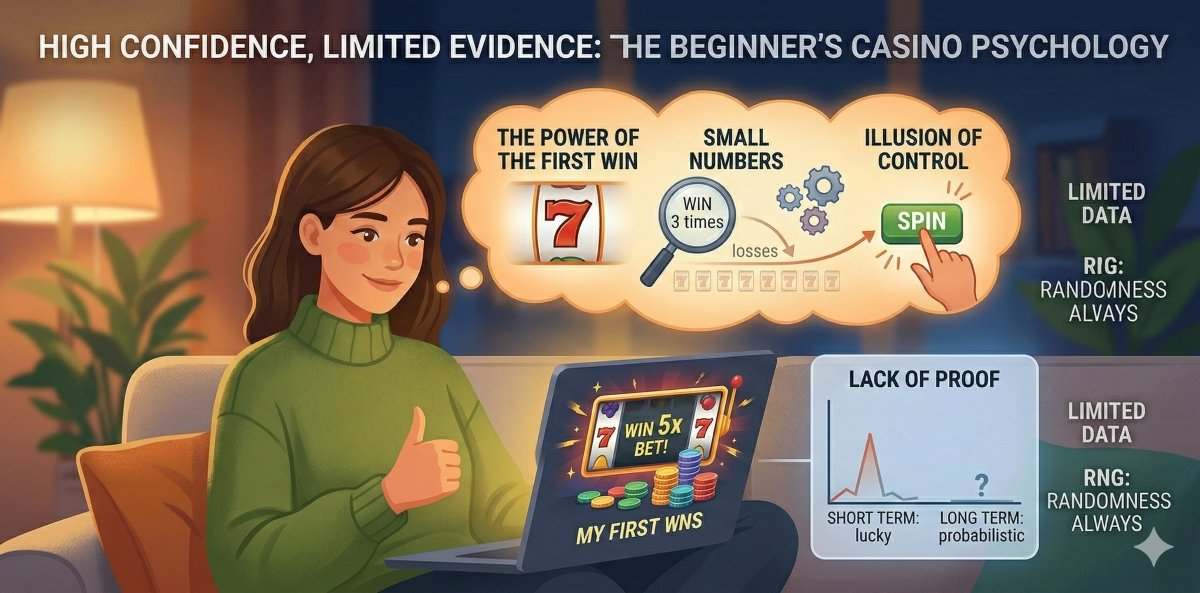
Complex systems break this relationship. Early positive results often come from randomness rather than insight. Yet beginners instinctively interpret early success as evidence that they are doing something right. The system does nothing to contradict this interpretation because short‑term outcomes are not designed to explain themselves.

Success feels clear and meaningful, so it feels educational. Learning, by contrast, is slow and ambiguous. Beginners gravitate toward signals that feel decisive, a reaction that mirrors how immediate rewards reinforce behavior in many areas of life.

Why Early Outcomes Shape Expectations Too Strongly

Initial results disproportionately shape expectations. A small streak of positive outcomes can define how a beginner interprets the entire system. Confidence forms long before enough information exists to justify it.

Once this narrative is established, later negative outcomes feel inconsistent rather than expected. Even if the system has behaved the same way all along, it appears to have changed. Beginners are not reacting to the outcomes themselves — they are reacting to the collapse of their expectations.

Why Negative Outcomes Feel Personal Instead of Informational

Early negative outcomes are rarely experienced as neutral data points. They feel personal. Something must have gone wrong. Someone must have made a mistake. The system may even feel unfair or adversarial.

This reaction comes from the assumption that negative outcomes are meant to teach something. In many complex environments, negative results occur even when decisions are reasonable. Without this context, beginners interpret negative outcomes as judgment rather than noise.

Why Simple Explanations Feel Safer Than Accurate Ones

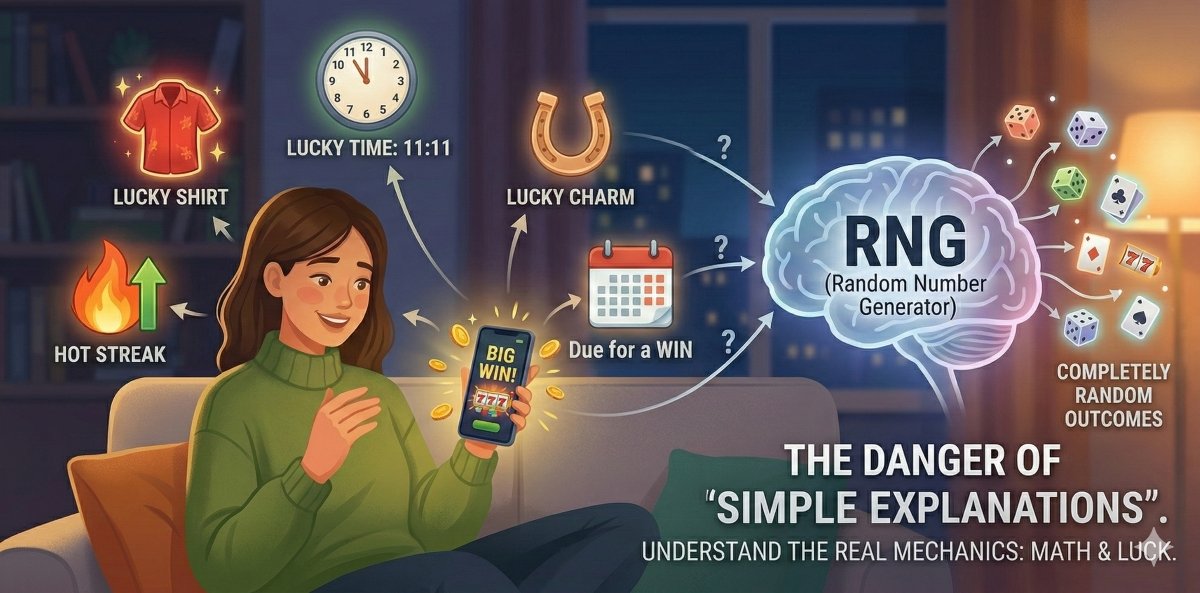
Complex systems are abstract. Outcomes emerge from interactions between probability, structure, and participation rather than clear cause‑and‑effect relationships. Beginners prefer explanations that simplify this complexity.

Simple narratives provide emotional comfort. They turn uncertainty into something understandable. Accurate explanations require tolerating ambiguity without rushing to conclusions. Simplicity is chosen not because it reflects reality better, but because it reduces discomfort.

Why Frequency Is Mistaken for Skill

Frequent positive feedback creates an illusion of control. Repeated success feels like competence, but frequency alone does not explain the underlying structure. Beginners respond more strongly to visible repetition than to long-term patterns.

For a formal discussion of behavioral biases and cognitive misperceptions, see Investopedia – Cognitive Bias.

Why Experience Alone Doesn’t Correct These Errors

Time spent within a system does not automatically produce understanding. Repetition increases familiarity, not accuracy. Without improved interpretation, experience can reinforce misunderstandings rather than resolve them.

Why These Misunderstandings Are Structural, Not Personal

These misunderstandings are not unique to any one domain. They appear in any environment where outcomes are uncertain, feedback is frequent, and explanations are absent.

Beginners are not failing. They are responding normally to a system that provides results but does not provide interpretation. Systems produce outcomes — but they do not produce lessons.

How To Calculate Probability (Odds): A Simple Step-By-Step Guide

Understanding how to calculate odds is a foundational skill in probability, statistics, risk analysis, and everyday decision-making. Odds provide a structured way to compare outcomes, evaluate uncertainty, and interpret numerical signals without relying on intuition alone.

This guide explains what odds are, how they differ from probability, and how to calculate and convert between the two using clear, step-by-step methods. These concepts also form the analytical groundwork for understanding more advanced ideas such as the difference between win rate and expected value.

For beginners struggling with complex systems, see this related article for guidance.

What Are Odds?

Odds describe the relationship between the likelihood of an event occurring and the likelihood of it not occurring. They are typically expressed in one of three formats:

  • Ratio form (e.g., 3:1)
  • Fractional form (e.g., 3/1)
  • Decimal form (e.g., 4.0)

While odds are closely related to probability, they are calculated and interpreted differently.

Probability vs. Odds

ConceptProbabilityOdds
MeaningLikelihood of an event out of all possible outcomesRatio of occurrence to non-occurrence
FormulaFavorable outcomes ÷ Total outcomesFavorable outcomes ÷ Unfavorable outcomes

For example, if an event has a 25% probability, it occurs once out of four trials. Expressed as odds, this becomes 1 : 3, meaning one occurrence versus three non-occurrences.

How To Calculate Odds From Probability

Step 1: Identify the probability
Assume an event has a probability of 40%.

  • Probability of occurrence = 0.40
  • Probability of non-occurrence = 0.60

Step 2: Divide occurrence by non-occurrence

  • Odds = 0.40 ÷ 0.60 = 2 : 3

This means the event is expected to occur twice for every three times it does not occur.

How To Calculate Odds From Total Outcomes

If the total number of possible outcomes is known, odds can be calculated directly.

Example:

  • Total outcomes: 10
  • Favorable outcomes: 2
  • Unfavorable outcomes: 8
  • Odds = 2 : 8 → Simplified = 1 : 4

This expresses one favorable outcome for every four unfavorable outcomes.

How To Convert Odds Into Probability

To convert odds back into probability, use the formula:

Probability = Favorable odds ÷ (Favorable odds + Unfavorable odds)

Example:
If the odds are 3 : 1 → Probability = 3 ÷ (3 + 1) = 3 ÷ 4 = 75%

Why Understanding Odds Matters

Odds calculations are used across many disciplines, including finance, insurance, research, and predictive modeling. Understanding odds helps prevent common interpretation errors, such as:

  • Confusing odds with probability
  • Misreading ratios as guarantees
  • Overestimating certainty based on numerical size

Odds are not predictions. They are structured comparisons that describe how uncertainty is distributed within a system.

For a deeper explanation of probability and odds in structured decision-making, see Stanford Encyclopedia of Philosophy – Probability.

Key Takeaway

  • Probability describes how often something happens.
  • Odds describe how occurrence and non-occurrence are balanced against each other.

Learning how to calculate and convert between probability and odds is less about arithmetic and more about understanding how uncertainty is expressed and compared. When interpreted correctly, odds become a language for describing risk, not a promise of outcomes.

Win Rate vs. Expected Value

One of the most common misunderstandings in sports betting—and in many risk-based systems—is the belief that “winning more often” automatically means better performance. This assumption feels natural. In most areas of life, a higher success rate usually signals competence or improvement. In pricing-based markets, however, win rate and long-term outcomes follow very different rules.

Understanding the distinction between win rate and expected value requires reframing betting not as a prediction exercise, but as a pricing system. These two concepts measure different things, operate on different time horizons, and can even point in opposite directions. Markets do not simply collect information; they transform information into prices, and those prices determine expected value.

For an example of how beginners often misinterpret complex systems, see this related article.

What Win Rate Measures: The Frequency Trap

Win rate is a simple metric. It measures how often a chosen outcome succeeds. If 60 out of 100 selections win, the win rate is 60%. The calculation is straightforward and the feedback is immediate.

The limitation is that win rate measures frequency, not value.

This distinction matters because outcomes are not priced equally. Treating all wins and losses as equivalent ignores the most important variable in any pricing system: price itself. If wins generate small gains while losses produce larger costs, it is entirely possible to maintain a high win rate and still lose money over time. Conversely, if occasional wins are large enough to offset frequent losses, a low win rate can still produce a positive result.

Win rate alone cannot distinguish between these two scenarios.

What Expected Value Measures: Decision Quality Over Time

Expected value (EV) measures the average outcome of a decision over repeated trials. It combines probability and price into a single framework. Expected value depends on three elements:

  • The probability of winning and losing
  • The size of the gain when a win occurs
  • The size of the loss when a loss occurs

Because expected value incorporates price, it evaluates decision quality rather than outcome frequency. A selection can win often and still be unfavorable if the price consistently understates the true risk. This occurs when the implied probability embedded in the price is higher than the actual probability of success.

In this sense, expected value is not about what happens next, but about what happens on average if the same decision is repeated many times. For a technical explanation of expected value in decision-making, see Investopedia’s definition of Expected Value (EV).

Variance and the Noise of Short-Term Results

Expected value describes long-run averages, but variance explains how uneven outcomes can be along the way. A sequence with positive expected value can still produce long losing streaks. A sequence with negative expected value can still experience extended winning runs.

Short-term outcomes are dominated by variance. Long-term outcomes are dominated by expected value. This is why individual results or short sequences provide very little reliable information about whether a decision is favorable or unfavorable.

The Psychological Appeal of Win Rate

Humans naturally associate frequent success with correctness. A high win rate feels reassuring because losses occur less often, creating short-term emotional comfort. However, comfort is not the same as sustainability.

Pricing systems do not evaluate success by how often participants win. They evaluate outcomes by how value accumulates across volume. From a system perspective, win rate is largely irrelevant. What matters is whether prices preserve structural margins over time.

Why Win Rate and Expected Value Are Often Confused

Win rate is visible, intuitive, and emotionally salient. Expected value is abstract, delayed, and statistical. As a result, people often substitute one for the other, even though they answer fundamentally different questions.

Win rate asks: How often was I right?
Expected value asks: Was this decision priced in my favor?

When these questions are conflated, performance is misjudged. Decisions are optimized for emotional comfort rather than structural advantage.

Conclusion: Frequency Is Not Performance

Win rate describes how often outcomes succeed. Expected value describes whether decisions are favorable within a pricing system. The two are not interchangeable, and treating them as such leads to persistent misinterpretation of results.

In environments governed by uncertainty, price, and variance, winning more often does not necessarily mean performing better. Long-term outcomes are shaped not by how frequently success occurs, but by how decisions are priced relative to risk.

Understanding this distinction shifts evaluation away from short-term results and toward the underlying structure that actually determines sustainability.

How Probability (Odds) Are Calculated: From Core Concepts to Practical Interpretation

Probability and odds are not merely calculation tools. They are two different languages for expressing uncertainty. Even when describing the same event, the choice of representation changes how risk is perceived and how decisions are framed.

Understanding this difference is less about mathematical skill and more about interpretation—how numbers function within systems and how they shape judgment. For a practical example of how real-time events influence decision-making, see this related article.


Probability and Odds: Arranging the Same Information Differently

Probability expresses how often a specific outcome occurs relative to all possible outcomes. Odds, by contrast, compare the occurrence of an outcome directly against its non-occurrence.

Key differences:

  • Probability emphasizes frequency: how often something happens

  • Odds emphasize contrast: how occurrence and non-occurrence are balanced

  • Probability describes absolute position within a set

  • Odds describe relational tension between outcomes


Why Systems and Markets Prefer Odds Over Probability

In real-world decision environments—such as sports analysis, financial markets, insurance, and risk modeling—odds are often favored over raw probability. This is because odds reveal structure, not just likelihood. This structural clarity is why the practical application of probabilistic thinking focuses on the calculation and interpretation of odds as a primary method for assessing value.

Odds are well suited for questions such as:

  • How asymmetric is success relative to failure?

  • Where is structural risk concentrated?

  • How do small changes shift the overall balance of outcomes?

For this reason, odds function less as prediction tools and more as representations of asymmetry and exposure.


Calculation Is Not the Goal—Conversion Is

The mathematical relationship between probability and odds matters, but not because it produces a number. Its value lies in transforming the same information into a different interpretive frame.

Converting probability to odds allows:

  • Likelihood to be reframed as competitive ratios

  • The weight of non-occurrence to become visible

  • Asymmetries in risk distribution to stand out

Converting odds back to probability allows:

  • Relative expressions to return to absolute frequency

  • Easier intuitive comparison across outcomes

  • Integration with statistical or analytical models

These conversions are not calculations for their own sake. They are shifts between interpretive layers. For a structured explanation of sports betting basics, see this official guide by the National Council on Problem Gambling.


Odds Formats Reflect Perspective, Not New Information

Fractional, ratio-based, and decimal odds do not encode different data. They emphasize different aspects of the same structure.

  • Fractional or ratio formats highlight success-versus-failure contrast

  • Decimal formats highlight total return if an outcome occurs

The distinction is not about convenience, but about which relationship is made most visible.


Odds Are Closer to Prices Than Predictions

Odds are often mistaken for forecasts. Structurally, they are not statements about what will happen, but about how risk is arranged.

In market contexts, odds typically reflect:

  • Underlying probability estimates

  • Structural margins or costs

  • Supply-and-demand imbalance

  • Risk exposure management

A high or low odd is not a declaration of correctness. It is a signal showing where uncertainty and exposure are concentrated.


Most Errors Are Interpretive, Not Mathematical

Misunderstandings around probability and odds rarely stem from calculation mistakes. They arise from reading numbers in the wrong context.

Common misinterpretations include:

  • Treating odds as direct probability

  • Reading relative ratios as absolute truth

  • Confusing numerical size with accuracy

These are category errors about what odds are designed to express.


Understanding Odds Structurally

Understanding odds does not mean being able to calculate them quickly. It means understanding:

  • How uncertainty is structured

  • How risk is compared and positioned

  • How numerical framing guides judgment

From this perspective, odds are closer to language than to arithmetic. When that language is understood, numbers stop feeling arbitrary and start revealing the architecture of decision-making systems.


Conclusion: Odds Describe Relationships, Not Outcomes

Probability describes where an event sits within a distribution. Odds describe how events relate to one another. Formulas are simply the bridge between these perspectives. The real substance lies in the meaning structure that numbers create.

When odds are understood structurally, they stop appearing as tools for predicting results and begin to function as system signals—explaining risk, imbalance, and the conditions under which choices are made.

Would you like me to create a comparison table showing how the same outcome is represented across fractional, decimal, and American odds formats?