
Completion of G Stadium in Gwangju, Gyeonggi-do

Introduction

In April 2026, Daebo Construction announced the completion of G Stadium in Gwangju, Gyeonggi Province. The new facility is set to host the upcoming Gyeonggi Provincial Sports Festival and Para Sports Festival, marking a milestone in regional sports infrastructure. While the announcement highlights a venue ready for competition, its deeper significance lies in how such investments reshape community engagement, digital participation, and regional identity. For readers in Yongin and across Gyeonggi-do, the story of G Stadium illustrates how sports facilities are more than physical structures — they are catalysts for hybrid engagement models that blend offline and online fan behavior.

Context: Why G Stadium Matters

Sports facilities are central to how communities experience athletic culture. G Stadium’s completion is not just about providing a venue for competitions; it represents a broader commitment to inclusivity, accessibility, and civic pride.

  • Provincial Sports Festival: A flagship event that brings together athletes from across Gyeonggi-do, reinforcing regional unity.
  • Para Sports Festival: Hosting para-athletes highlights inclusivity, ensuring that sports culture reflects diverse participation.
  • Symbolic Value: The stadium signals Gwangju’s growing role in Gyeonggi-do’s sports ecosystem, complementing existing facilities in Suwon, Yongin, and other cities.

Community Engagement: Reinforcing Regional Identity

The completion of G Stadium encourages residents to participate in sports festivals, reinforcing civic and regional identity:

  • Local Pride: Hosting major events strengthens Gwangju’s reputation as a sports hub within Gyeonggi-do.
  • Participation Opportunities: Residents can engage as athletes, volunteers, or spectators, deepening their connection to community life.
  • Cultural Continuity: Sports festivals become annual traditions, embedding themselves into the cultural fabric of the region.

For Yongin readers, this demonstrates how infrastructure projects in neighboring cities contribute to a shared Gyeonggi-do identity.

Digital Ecosystem Link: Hybrid Engagement Models

Modern sports facilities are not just physical venues; they are nodes in a digital ecosystem. Coverage of G Stadium’s events will likely be amplified through streaming platforms and social media:

  • Streaming Access: Fans unable to attend in person can watch live broadcasts, expanding the reach of provincial events.
  • Social Media Amplification: Highlights, interviews, and fan reactions circulate online, creating digital communities around local sports.
  • Hybrid Participation: Residents may attend physically while simultaneously engaging digitally, sharing experiences in real time.

This hybrid model reflects how sports consumption is evolving, blending offline attendance with online interaction.

Educational Value: Understanding Infrastructure’s Role

For beginners, G Stadium provides a clear example of how regional investments in sports facilities reshape fan behavior:

  1. Offline Engagement: Facilities provide spaces for physical participation, from playing fields to spectator stands.
  2. Online Engagement: Digital coverage ensures accessibility, allowing fans to follow events regardless of location.
  3. Hybrid Models: The combination of offline and online engagement creates new forms of participation, where fans are both attendees and digital contributors.

This educational perspective helps readers see how infrastructure projects influence broader sports ecosystems.

Regional Relevance: Gyeonggi-do’s Sports Landscape

G Stadium’s completion underscores Gyeonggi-do’s commitment to sports development:

  • Balanced Growth: By investing in facilities across multiple cities, the province ensures equitable access to sports culture.
  • Complementary Infrastructure: G Stadium complements existing venues in Suwon, Yongin, and other cities, creating a network of sports hubs.
  • Provincial Identity: Hosting festivals in Gwangju reinforces the idea that sports are a shared cultural resource across Gyeonggi-do.

For Yongin readers, this shows how regional investments shape collective identity, connecting local communities to provincial narratives.

Behavioral Insight: How Fans Engage

The completion of G Stadium also provides insight into how fans engage with sports content:

  • Event Attendance: New facilities encourage higher turnout, as modern amenities improve the spectator experience.
  • Digital Sharing: Fans increasingly document and share experiences online, creating secondary layers of engagement.
  • Community Participation: Local residents often volunteer or contribute to event organization, reinforcing civic bonds.

These behavioral patterns highlight how infrastructure projects influence both individual and collective engagement.

Comparative Insight: Global Trends

G Stadium’s completion reflects global trends in sports infrastructure:

  • Inclusivity: Modern facilities prioritize accessibility for para-athletes and diverse participants.
  • Digital Integration: Venues are designed with broadcasting and streaming in mind, ensuring seamless digital coverage.
  • Community Focus: Facilities serve not just professional athletes but also local communities, reinforcing civic identity.

Understanding these trends helps readers situate G Stadium within broader global narratives of sports development.

Broader Implications: Sports and Civic Development

The story of G Stadium illustrates broader principles of how sports intersect with civic development:

  • Economic Impact: Hosting festivals generates activity for local businesses, from hospitality to retail.
  • Cultural Diplomacy: Sports events showcase regional identity, contributing to Korea’s broader cultural narratives.
  • Policy Alignment: Infrastructure projects align with national goals of promoting health, inclusivity, and community engagement.

These implications show how sports facilities are embedded in broader societal frameworks. They also connect to ongoing debates about how digital platforms shape participation and fairness in Korea’s information ecosystem, such as the Online Platform Fairness Bill currently sparking debate (South Korea’s Online Platform Fairness Bill Sparks Debate). Together, these developments highlight how physical infrastructure and digital regulation both influence how communities engage with sports and media.

Conclusion

The completion of G Stadium in Gwangju, Gyeonggi-do is more than an infrastructure milestone — it is a cultural and behavioral turning point. By hosting the Gyeonggi Provincial Sports Festival and Para Sports Festival, the stadium reinforces regional identity, promotes inclusivity, and creates opportunities for hybrid engagement models that blend offline attendance with digital participation.

For Yongin readers, the story of G Stadium demonstrates how regional investments in sports facilities reshape both fan behavior and civic identity. As Gyeonggi-do continues to expand its sports infrastructure, facilities like G Stadium will serve as catalysts for community engagement, digital amplification, and cultural continuity, ensuring that sports remain a central part of regional life.

Further Reading

South Korea’s Online Platform Fairness Bill Sparks Debate

Introduction

South Korea’s National Assembly is currently debating the proposed Online Platform Fairness Bill, a landmark piece of legislation that would expand the Korea Fair Trade Commission’s (KFTC) authority over digital platforms. The bill has ignited discussions across industries, civic groups, and local communities, including Yongin residents, who increasingly rely on online platforms for everything from sports streaming to workplace communication. At its core, the bill raises questions about fairness, transparency, and consumer protection in the digital age.

Expanding Oversight in the Digital Economy

The Online Platform Fairness Bill seeks to strengthen the KFTC’s regulatory reach over major digital platforms. This includes e-commerce marketplaces, app stores, streaming services, and social media networks. The legislation is designed to address concerns about market dominance, opaque algorithms, and unfair trade practices that can disadvantage smaller businesses and limit consumer choice.

For citizens, the bill signals that everyday digital interactions are no longer seen as private or neutral spaces. Instead, they are part of a regulated ecosystem where government oversight ensures that platforms operate fairly and transparently.

Yongin Residents and Digital Oversight

For residents of Yongin, the bill highlights how user behavior on digital platforms is increasingly subject to regulatory scrutiny. Whether watching local futsal highlights online, shopping through mobile apps, or engaging in workplace communication tools, citizens are part of a system where platform rules and government oversight intersect.

  • Transparency in Algorithms: Users want clarity on how recommendations are made — whether in sports content feeds or product listings.
  • Fairness in Access: Small businesses and local creators in Yongin worry about being overshadowed by larger players unless platforms are held accountable.
  • Consumer Protection: Citizens expect safeguards against misleading advertising, hidden fees, or exploitative terms of service.

This behavioral shift reflects a growing awareness that digital engagement is not just personal choice but part of a broader governance framework.

Regulation Shapes Digital Engagement

The bill provides a framework for understanding how regulation shapes digital engagement. It demonstrates that everyday interactions — from sports streaming to social media — are tied to governance structures that balance innovation with accountability.

Key Lessons

  1. Platforms as Public Infrastructure: Digital platforms function like utilities, shaping how citizens access information, entertainment, and commerce.
  2. Regulation as a Balancing Act: Oversight ensures fairness but must avoid stifling innovation.
  3. Citizen Awareness: Users must understand that their digital behaviors are influenced by both platform design and regulatory rules.
  4. Global Comparisons: Similar debates are unfolding worldwide, from the EU’s Digital Markets Act to U.S. antitrust investigations, showing Korea’s alignment with global governance trends.

Media Literacy and User Awareness

The debate underscores the importance of media literacy and user awareness. Citizens must recognize how platform rules and government oversight affect the credibility and accessibility of the content they consume.

  • Credibility of Information: Oversight can reduce misinformation, but users must remain critical of sources.
  • Accessibility of Content: Regulation may ensure fairer access, but users should be aware of how rules shape what they see and consume.
  • User Responsibility: Awareness of terms of service, privacy policies, and platform governance helps citizens make informed choices.

For Yongin residents, this means understanding that their digital sports highlights, workplace apps, or social media feeds are not neutral — they are curated, regulated, and shaped by both corporate and governmental forces. For a broader cultural perspective, see Regional Acceptance of Betting Culture: Worldviews and Social Attitudes, which explores how societal attitudes toward fairness and risk shape engagement across different regions.

Broader Implications

The Online Platform Fairness Bill has implications beyond consumer protection:

  • Economic Equity: Small businesses gain a fairer chance to compete in digital marketplaces.
  • Cultural Representation: Local content creators may benefit from transparency in recommendation systems.
  • Global Positioning: Korea positions itself as a leader in digital governance, aligning with international standards while tailoring policies to national needs.

Conclusion

South Korea’s Online Platform Fairness Bill represents a pivotal moment in the governance of digital ecosystems. By expanding the KFTC’s authority, the legislation seeks to ensure fairness, transparency, and consumer protection in spaces that have become central to everyday life.

For citizens — including those in Yongin — the bill is a reminder that digital engagement is inseparable from governance. From sports streaming to workplace apps, user experiences are shaped by both platform design and regulatory oversight. The debate highlights the need for media literacy, user awareness, and active participation in shaping the future of digital fairness.

Further Reading

Yongin FC Futsal Tournaments Deepen Citizen Engagement

Introduction

In March 2026, Yongin FC hosted a series of workplace and women’s amateur futsal tournaments that drew hundreds of participants and spectators. While the matches themselves were lively and competitive, the deeper significance lay in how these events transformed local sports culture. By inviting citizens not only to watch but to play, Yongin FC reinforced the idea that sports are not just entertainment but a shared community identity.

Expanding the Role of Local Clubs

Yongin FC’s initiative reflects a growing trend among Korean sports institutions: moving beyond elite competition to embrace grassroots participation. Workplace teams brought colleagues together in a new setting, while women’s amateur squads highlighted inclusivity and representation. The tournaments were structured to be accessible, with clear rules, community-based organization, and a celebratory atmosphere that encouraged families and friends to attend.

This approach demonstrates how clubs can serve as community anchors, embedding sports into everyday life rather than limiting engagement to professional matches.

From Spectatorship to Participation

Traditionally, fan culture has been defined by spectatorship — cheering from the stands or following teams online. Yongin FC’s futsal tournaments illustrate a shift toward participatory culture. Citizens became players, referees, organizers, and supporters, blurring the line between athlete and fan.

  • Active Identity Formation: By playing, citizens internalize sports as part of their lifestyle, not just entertainment.
  • Community Bonding: Workplace teams strengthened camaraderie, while women’s tournaments created new networks of support and visibility.
  • Fan Culture Evolution: Participation fosters deeper loyalty to the club, as fans feel personally invested in its ecosystem.

This participatory model reflects broader behavioral insights: people are more likely to sustain long-term engagement when they are active contributors rather than passive consumers.

Grassroots Sports Ecosystems

The tournaments serve as a case study in how grassroots sports ecosystems expand participation. Yongin FC’s model shows that structured amateur competitions can be powerful tools for building long-term engagement.

Key Lessons

  1. Accessibility Matters: By lowering barriers to entry, clubs can attract diverse participants — from office workers to women balancing family and sport.
  2. Structured Competition: Organized tournaments provide legitimacy and continuity, ensuring that amateur play is taken seriously.
  3. Community Identity: Grassroots sports become identity markers, reinforcing local pride and belonging.
  4. Sustainability: Participation-driven ecosystems create a pipeline of future fans, volunteers, and even semi-professional athletes.

This aligns with global trends where clubs increasingly invest in community programs to strengthen their social footprint.

Balancing Digital and Physical Engagement

Modern fan culture often leans heavily on digital platforms — streaming, social media, and online communities. While these tools expand reach, they risk reducing engagement to passive consumption. Yongin FC’s futsal tournaments counterbalance this by embedding sports into everyday life.

  • Reducing Reliance on Digital-Only Engagement: Physical participation ensures that fans connect with the club beyond screens.
  • Health and Lifestyle Benefits: Encouraging citizens to play promotes wellness, reducing risks associated with sedentary digital habits.
  • Resilience of Fan Culture: By diversifying engagement channels, clubs safeguard against fluctuations in online trends or platform algorithms.

For comparison, see Mobile-First and Digital Experiences Dominating Play, which explores how digital-first strategies shape engagement. Yongin FC’s tournaments highlight the importance of balancing these digital trends with tangible, community-based participation.

Cultural and Social Implications

The tournaments highlight several broader cultural shifts:

  • Gender Inclusion: Women’s amateur tournaments challenge stereotypes and expand opportunities for female athletes.
  • Workplace Integration: Sports become a tool for corporate wellness and team-building, reinforcing the idea that athletic participation is part of professional life.
  • Local Identity: Citizens see themselves reflected in the club’s activities, strengthening loyalty and civic pride.

These implications show how sports can function as a social glue, binding diverse groups together through shared play.

Conclusion

Yongin FC’s workplace and women’s amateur futsal tournaments in March 2026 were more than recreational events. They were strategic investments in community identity, participatory fan culture, and grassroots sports ecosystems. By embedding sports into everyday life, Yongin FC reduced reliance on digital-only engagement and reinforced the idea that athletic participation is a collective experience.

For readers, the lesson is clear: sports clubs thrive when they move beyond elite competition to embrace community participation. Yongin FC’s model demonstrates how structured amateur tournaments can deepen citizen engagement, foster inclusivity, and build sustainable fan cultures that endure both online and offline.

Further Reading

  • Mobile-First and Digital Experiences Dominating Play — how digital-first strategies shape engagement.
  • FIFA Grassroots Development Programme — global initiatives to expand participation in football and futsal.
  • International Olympic Committee: Community Engagement in Sport— IOC’s framework for embedding sports into community life.
  • UNESCO’s Education and Sport Report — highlighting international standards for integrating sports into broader educational priorities.

The Danger of the “Lucky Charm”: Why New Online Casino Players Overemphasize Single Factors

When you first start playing at an online casino, the experience can be exciting and a little overwhelming. There are hundreds of colorful slots, table games with complex rules, and live dealers waiting to chat. You might find yourself winning a few spins on a slot machine or a hand of blackjack and immediately wondering, “Why did I win?”

This is a natural human reaction. Our brains like to find simple reasons for things happening. We want to believe that we can understand—and perhaps even control—luck. However, a very common mistake beginners make is fixating on single factors to explain their wins or losses. They might believe they won because they played at a certain time of day, used a “lucky” betting pattern, or were just “on a hot streak.”

In reality, online casino games are complex. The outcome of any single spin or hand is decided by a combination of factors, not just one simple thing. Overemphasizing a single factor is not only incorrect, but it can also lead to bad decisions and risky gambling behavior.

The Trap of Simple Explanations

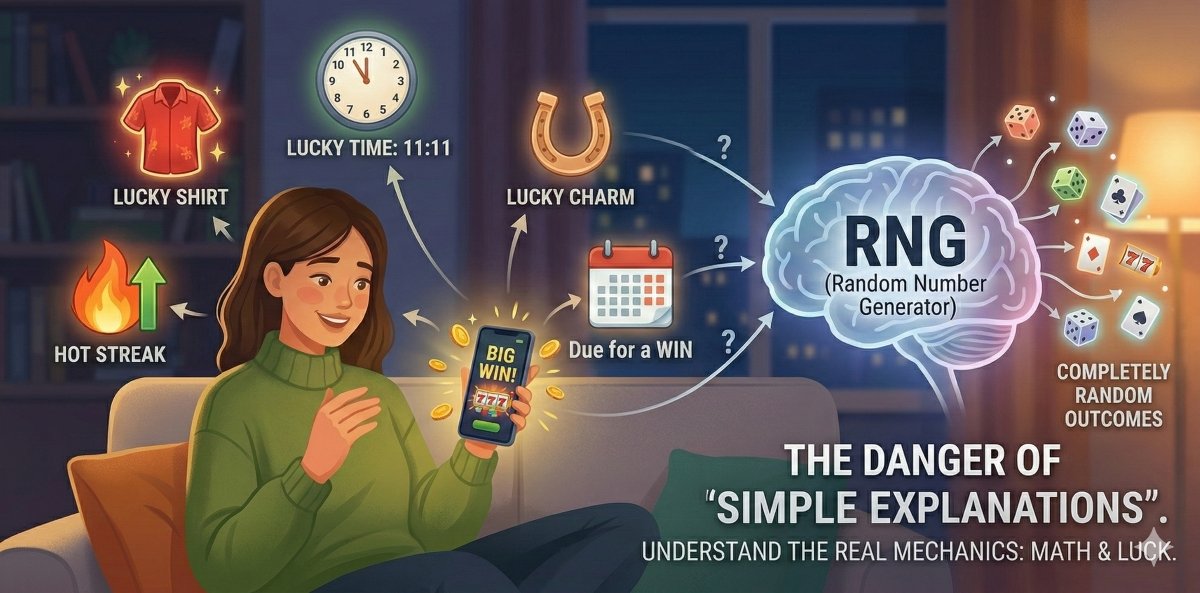
Psychology plays a big role in why we overemphasize single factors. Human beings are wired to seek patterns and explanations. If you win while wearing your favorite red shirt, your brain might make a connection: “Red shirt = winning.”

This is known as a correlation error. Just because two things happen at the same time does not mean one caused the other. However, a simple explanation feels much more comfortable than accepting that winning was mostly due to random chance.

Beginners often cling to these simple explanations because they don’t yet understand how complex the games actually are. Examples of single factors beginners focus on include:

  • “Lucky” timing: Believing that a slot pays out more often late at night.
  • “Hot” and “Cold” machines: Thinking a slot machine that hasn’t paid out recently is “due” for a win (the Gambler’s Fallacy).
  • Lucky charms or rituals: Trusting in specific objects or behaviors to bring good luck.
  • Betting systems: Believing that doubling your bet after every loss (like the Martingale system) guarantees a win.

The problem with all these single-factor explanations is that they completely ignore the actual mechanics driving the game.

The Reality of Randomness (RNG)

The most important concept for any online casino beginner to understand is the Random Number Generator (RNG). Every licensed and reputable online casino game, whether it’s a slot, roulette, or digital blackjack, uses an RNG computer program. This software generates thousands of random numbers every single second. The moment you press “spin” or “deal,” the RNG picks a number that determines the exact outcome.

Crucially, the RNG ensures that every single outcome is completely random and independent of the last one. The slot machine does not remember that you just lost five times in a row. It does not know that you are wearing a “lucky” shirt. It is just a mathematically random event. Therefore, focusing on a single factor like “due for a win” or “unlucky timing” is meaningless because the RNG ensures that previous events have absolutely zero influence on the next one.

The Bigger Picture: Math vs. Luck

Winning a single session at an online casino is almost entirely about luck. You could be incredibly lucky and win a jackpot on your very first spin. However, the reason casinos are profitable in the long run is not luck; it’s mathematics. Every game is designed with a House Edge or a theoretical Return to Player (RTP) percentage.

The RTP is a number that tells you what percentage of all wagered money a game will pay back to players over a very long period of time (millions of spins or hands). The House Edge is the opposite—the small percentage the casino statistically keeps. This long-term math is the truly important factor. Beginners overlook this because they are focused on their short-term experience. They might win on a “hot machine” and think they’ve beaten the system, ignoring that the long-term math always favors the house.

The Dangers of Overemphasizing Single Factors

Why does it matter if you believe in lucky streaks or overdue wins? Believing in these single-factor myths can lead to dangerous gambling habits:

  1. Chasing Losses: If you believe you are “due” for a win because you have lost many times, you might keep betting more money trying to win back what you lost. This is called chasing losses and is a major sign of problem gambling.
  2. Over-Betting on “Lucky Streaks”: If you think you’re “on a hot streak,” you might start making much larger bets than your budget allows, wrongly believing you cannot lose.
  3. Ignoring Responsible Gambling: When you focus on trying to control luck through single factors, you stop focusing on what you can control: your budget, your time limits, and playing safely.

The Smarter Approach for Beginners

To have a safe and fun experience at an online casino, you need to look past simple, single-factor explanations. Accept the reality that short-term results are almost entirely driven by random luck (thanks to the RNG), and long-term results are driven by the math of the game (the House Edge).

Instead of searching for a magical reason for winning, focus on the factors you can control:

  • Set a strict budget (bankroll) and stick to it, no matter what.
  • View casino games as entertainment, not as a way to make money.
  • Play only at licensed, reputable casinos that use tested RNGs.
  • Take regular breaks and never gamble with money you cannot afford to lose.

Conclusion

By understanding that winning and losing is a complex mix of randomness and math, and not a single factor like a lucky charm, you will be a much smarter, safer, and happier online casino player. The key is to resist the temptation of simple explanations and instead embrace the reality of chance, probability, and responsible play. Confidence should come from managing your bankroll wisely, not from believing in rituals or streaks.

Why Online Casino Beginners Feel Confident Even Without Proof

Congratulations! You have just won your first few rounds at an online casino. Perhaps you won a hand of blackjack, saw three matching symbols on a slot machine, or correctly guessed red on the roulette wheel. It feels amazing. Suddenly, you feel a surge of confidence. You believe you understand how the game works. You might even think you have a special talent or a “winning streak.”

This feeling is very common, especially for beginners. But here is the strange truth: your confidence is likely very high, even though you have almost no real evidence to support it. Why does this happen? Our brains are wired in a specific way that can lead us to overestimate our abilities when we gamble. Understanding this process is the first step to becoming a smart and safe player.

Here is a simple breakdown of why confidence persists despite limited evidence in online casinos.

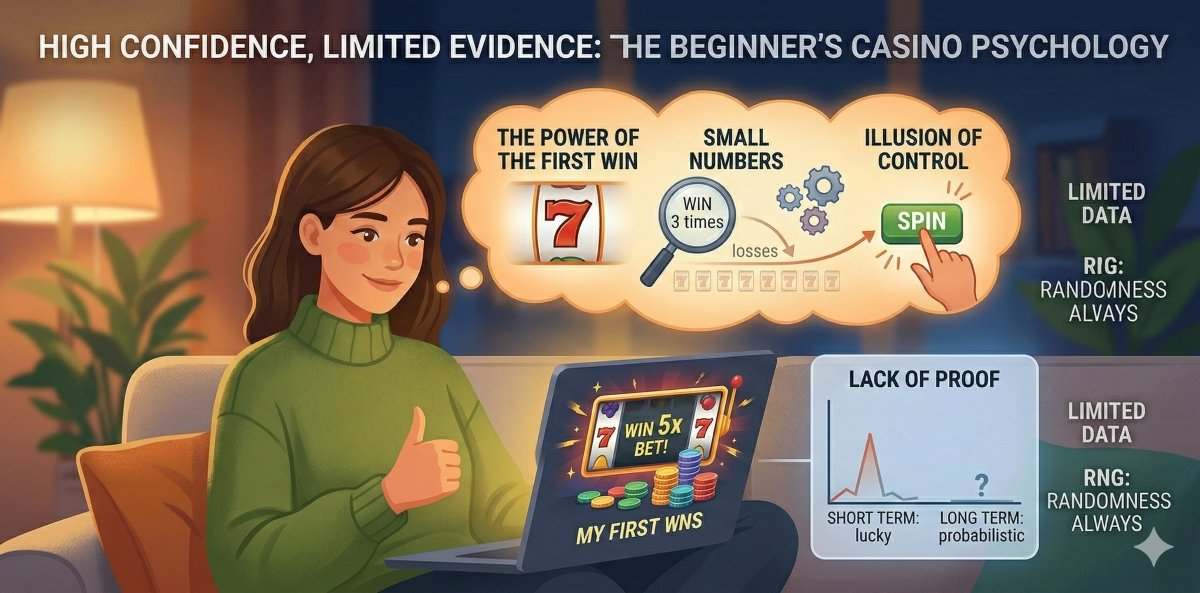
The Power of the First Win

Our brains react strongly to successful outcomes. When you win a game of chance, your brain releases a chemical called dopamine. This chemical makes you feel happy and excited. It is the same feeling you get when you eat your favorite food or receive a compliment.

Your brain wants that feeling again. Because that first win felt so good, your memory of it becomes very strong. However, you might quickly forget the times you lost. Our minds naturally focus on the positive “evidence” (the win) and ignore the negative “evidence” (the loss). Because you remember the win so vividly, your confidence grows, even if it was just luck. This is sometimes called “beginner’s luck,” but in reality, it is just randomness.

Small Numbers Lead to Big Mistakes

Imagine you flip a coin three times, and it lands on “heads” all three times. Does this mean the coin will always land on heads? Of course not. You know that if you flip it 100 times, it will be close to 50 heads and 50 tails.

However, in an online casino, we often make big decisions based on a few results. If a beginner wins four out of their first five blackjack hands, they don’t think, “I was lucky five times.” They often think, “I am good at blackjack.” This is a common mental trap. You need thousands of results to see the true mathematical reality of a game. Basing your confidence on just a few wins is a mistake because that “sample size” is way too small to prove anything.

The Illusion of Control

Many casino games are designed to be interactive. You get to press the “Spin” button on a slot machine, decide when to “Hit” or “Stand” in blackjack, or choose your lucky numbers in roulette. These actions give us the feeling that we are in control of the outcome.

Psychologists call this the “illusion of control.” We feel confident because we believe our choices directly affect random events. The truth is that licensed online casino games are run by software called a Random Number Generator (RNG). While your choices in a game like blackjack can influence your overall results, no amount of “feeling” or “choice” can change the fact that the next card or the next spin is completely random. The illusion of control makes us persist in our confidence because we feel responsible for the wins, even when they are pure chance.

We See Patterns That Do Not Exist

Humans are excellent at finding patterns. Our ancestors survived by identifying patterns in nature, like the movement of animals or the seasons. However, this skill can lead us astray in a casino.

We might look at a roulette history screen and see that the last five numbers were red. Our brain tells us, “Black is overdue! I am confident it will be black next!” Or we might notice that a slot machine hasn’t paid a big prize in a while and believe it is “due” for a win.

This is often called the gambler’s fallacy. The truth is that random events are independent. The fact that the last spin was red does not make the next spin more likely to be black. But because our brains strongly persist in looking for patterns, we develop a false confidence in our predictions based on these imaginary rules.

Fighting Overconfidence: The Key to Safe Play

Feeling confident after a win is natural and makes the experience fun. However, the goal is to enjoy the excitement without letting that confidence trick you into making bad decisions.

Here is how to fight overconfidence:

  • Set a strict budget: Before you even log in, decide how much money you are comfortable losing. This money is your entertainment fee.
  • Stick to your budget: Do not let a high feeling of confidence convince you to increase your bets beyond your limit. A winning streak is not a mathematical certainty; it is just a random cluster.
  • Accept randomness: Remind yourself constantly that licensed casino games are based on chance, not skill. You are not “mastering” a random number generator.
  • Take breaks: Step away from the game to let your emotional level come down. This helps you think clearly.

Conclusion

Confidence in a casino should be about your ability to manage your money and stick to your limits, not about your ability to predict the next random outcome. By understanding why your brain wants you to feel overly confident, you can enjoy online games responsibly. The excitement of a win is real, but it should never cloud your judgment. Safe play means recognizing that confidence without proof is just another trick of the mind—and one you can overcome with smart habits.

How Prior Results Shape Future Expectations

When we first enter an online casino, we often bring our daily habits with us. In our normal lives, we use the past to predict what comes next. If a restaurant was good last week, we expect it to be good today. If a friend is late three times, we expect them to be late a fourth time. This way of thinking is very helpful for survival, but it works differently when we play games of chance. For beginners, understanding how prior results shape future expectations is the best way to keep the experience fun and safe.

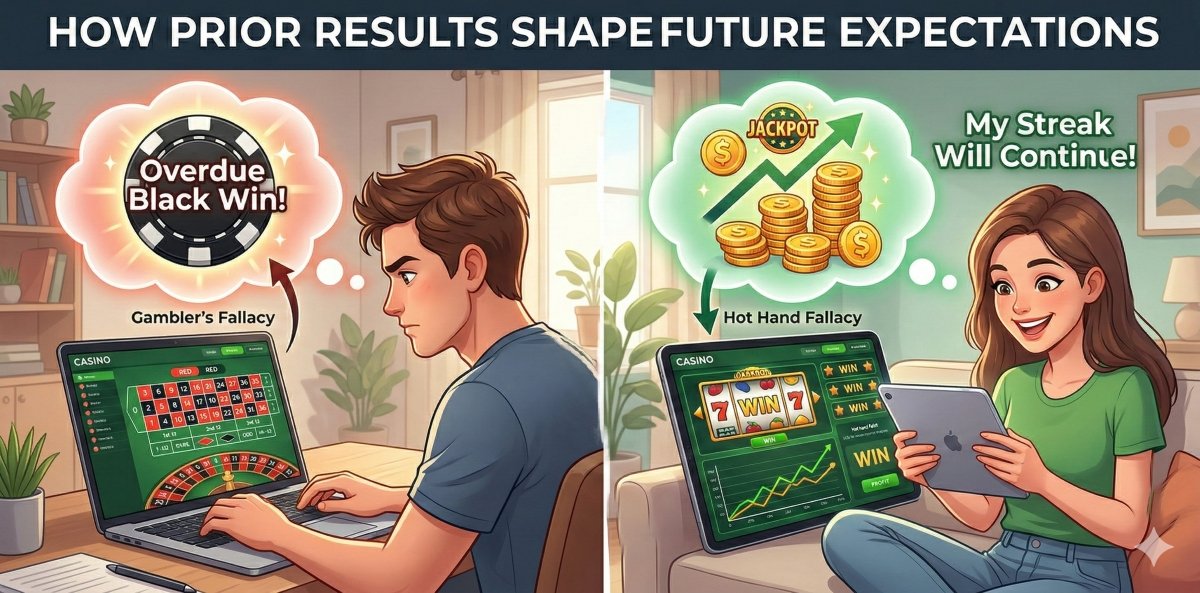
The Trap of the “Overdue” Win

One of the most common things we see with new players is the belief that a win is “due.” Imagine a player watching a digital roulette wheel. The ball lands on a red number five times in a row. Naturally, the player begins to feel that a black number is coming next. They think the game needs to balance itself out.

This is a mental trap called the gambler’s fallacy. We expect the future to fix the past. In reality, the online casino uses a piece of software called a Random Number Generator, or RNG. This software ensures that every single spin is a completely new event. The wheel does not remember that it just hit red five times. The odds of the next spin landing on black are exactly the same as they were before. When we let prior results convince us that a specific outcome is guaranteed, we often make bigger bets than we should.

The Illusion of the Hot Hand

On the other side of the coin, some players experience a “hot streak.” If a player wins three rounds of blackjack in a row, they might feel like they have a special rhythm or a “lucky touch.” They expect the winning to continue because it has already been happening.

This is often called the hot hand fallacy. We see a short string of success and assume it is a pattern that will last forever. This expectation is dangerous because it leads to overconfidence. A player who feels invincible is likely to ignore their budget. They might think they can’t lose, so they stop being careful with their money. It is important to remember that a winning streak is just a lucky cluster of random events. It does not change the mathematical edge that the house has in the long run.

How Memory Plays Tricks on Us

Our brains are very good at remembering the “big” moments and forgetting the boring ones. If we won a large payout on a specific slot machine last Tuesday, we might feel drawn to that same machine today. We expect it to be “lucky” again because of that one prior result.

This is a form of availability bias. We base our expectations on the most vivid memories we have. We forget the hours where nothing happened and focus only on the one moment where we won. This makes us overestimate how often wins actually happen. At Gambler Community, we always remind players that every session is independent. What happened last Tuesday has no power over what happens this afternoon.

The Role of Dopamine and Expectation

When we win, our brain releases a chemical called dopamine. This makes us feel excited and happy. This feeling is so strong that it shapes what we expect from the next game. After a win, we expect that same “high” again.

If the next result is a loss, it feels much worse because our expectations were so high. This often leads to “chasing losses.” A player who expected to win because of their prior success might keep playing longer than they planned to try and get that feeling back. By understanding that prior results do not guarantee future feelings, we can stay more grounded and calm during our sessions.

Managing Your Expectations for Better Play

The most successful way to enjoy an online casino is to change what you expect. Instead of expecting a win because of what happened ten minutes ago, we should expect randomness.

We suggest that beginners go into every game with the expectation that they are paying for a service. Much like paying for a ticket to a concert or a movie, the money spent is for the entertainment of the moment. If a win happens, it is a pleasant surprise, not a result that was “owed” to you by the math of the game.

Concrete Steps to Stay Smart

We can use a few simple rules to make sure prior results don’t cloud our judgment:

  • Set a hard limit: Before you start, decide on a budget. Do not change this budget based on whether you are winning or losing.
  • Take regular breaks: Stepping away from the screen helps reset your brain. It breaks the feeling that you are in a “streak.”
  • Focus on the present: Remind yourself that the current spin has no connection to the one before it.

Conclusion

By keeping these points in mind, we can enjoy the games without falling for the tricks our minds play on us. The past is a great teacher in life, but in a casino, the only thing that matters is the random moment happening right now. Understanding gambler’s fallacy, hot hand bias, memory tricks, and dopamine’s influence helps us stay grounded. With clear expectations and smart habits, gaming remains fun, safe, and entertaining—exactly what it should be.

The Future of Play: How VR and AR Will Change Gaming Environments

Do you remember the first video game you ever played? Perhaps you looked at a simple screen and used a joystick to move characters made of basic blocks. Gaming has come a very long way since then. We are now standing on the edge of a new revolution in entertainment. Virtual Reality (VR) and Augmented Reality (AR) are no longer just science fiction dreams. They are real technologies that are changing the way games are designed, played, and experienced. These technologies are not just altering the game characters; they are completely rewriting the rules for gaming environments.

In this article, we will explore exactly how VR and AR will change where and how we play in the near future.

Leaving the Real World: Total Immersion in VR

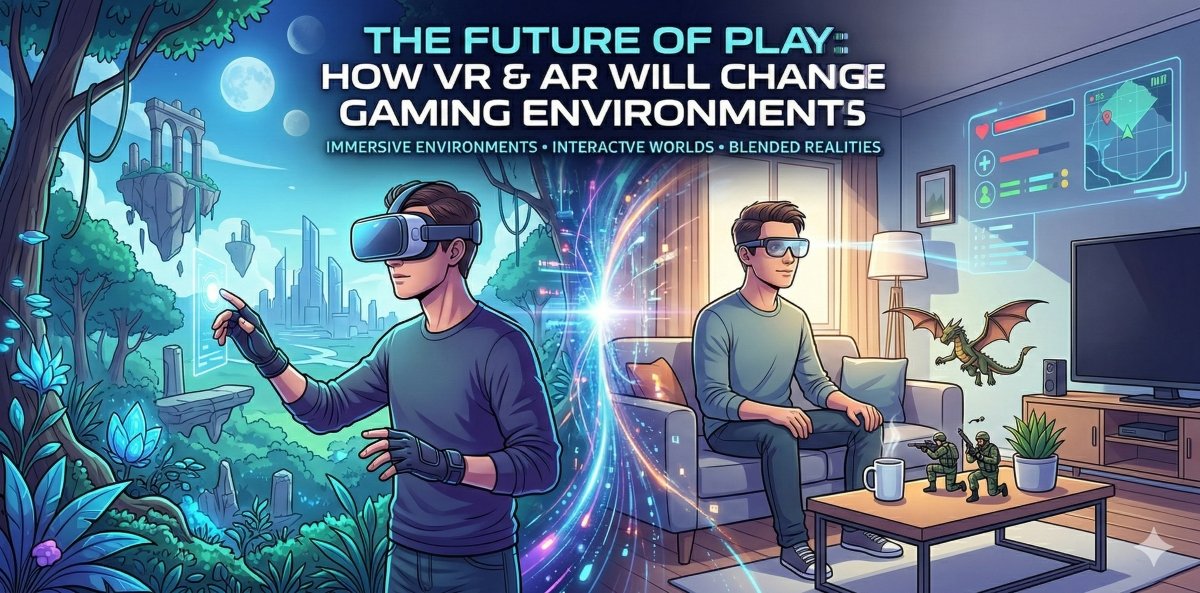
First, let’s look at Virtual Reality (VR). When you use a VR headset, you cannot see the room you are standing in. You are completely surrounded by a computer‑generated world. This is called “immersion.” In traditional gaming, you look at a screen (a “window”) into the game world. In VR, you are inside that window.

Endless Worlds Without Walls

In the future, gaming environments in VR will have no physical limits. Today, your game might be stopped by the walls of your bedroom. Tomorrow, developers will create environments that perfectly trick your senses. You could be standing on the snowy peak of a fantasy mountain or walking through the crowded streets of a futuristic city. You won’t just be pressing “forward” on a controller; you will be physically walking (in place) and turning your head to see everything. This level of immersion makes the environment feel like a real place, not just a picture on a monitor.

Interacting with Everything

The future of VR environments is also about interaction. Currently, you might only be able to pick up “important” items in a game. In future VR, almost everything in the digital environment will be interactive. You can pick up a rock, open a drawer, or knock over a cup. With advanced haptic gloves (gloves that let you feel digital objects), you might even sense the texture or weight of that rock. This physical interaction connects you to the environment more deeply than ever before.

AR: Bringing Digital Worlds Into Reality

While VR takes you away from reality, Augmented Reality (AR) does the opposite. AR takes digital information—like pictures or data—and puts it “on top” of your real surroundings. Think of the game Pokémon GO, where creatures appear on your phone screen as if they are in your garden. This is the start of AR.

Your Living Room as a Battlefield

Future AR gaming environments will not require you to leave your house. Instead, they will turn your home into the game. Imagine wearing lightweight AR glasses. Suddenly, tiny alien spaceships appear in your living room. They are not just flying around randomly; they are using your real ceiling fan for cover or hiding behind your actual sofa. Your dining table could become a virtual landscape for a strategy game, with miniature soldiers fighting among your salt and pepper shakers. The game learns your physical environment and uses it to enhance the play.

Beyond the Screen: Dynamic Information

AR also changes how you receive information within the environment. Currently, a video game might display your “health bar” or a map in the corner of your screen. This can be distracting. In an AR environment, this information can be placed naturally within the world. If you are playing a racing game in AR, your speed and position might appear as a faint projection on your actual wall. If you are solving a puzzle, clues might be overlayed directly onto the objects you are holding. This seamless integration makes gameplay more intuitive and less cluttered.

Changing How We Socialize

One of the biggest impacts of VR and AR on gaming environments is social interaction. Currently, when you play online with friends, you might see their avatar on your screen, and you talk to them through a microphone. It feels like you are separated by technology. In future VR gaming environments, playing with friends will feel like hanging out in real life. You will be able to see their hand gestures, watch their body language, and look them in the eye. You are not just playing a game together; you are sharing a space together.

This future is becoming possible because the technology is improving quickly. VR headsets are becoming lighter, faster, and wireless. AR glasses are getting smaller and looking more like normal spectacles. High‑speed internet (like 5G) allows huge amounts of environmental data to be streamed instantly, making multiplayer VR and AR experiences smooth and realistic.

Making Games Easier to Learn

Importantly, these technologies make gaming easier to understand, especially for non‑native English speakers or new players. Instead of reading complex menus or memorizing button combinations (like pressing ‘X’ to open a door), you simply reach out and turn the door handle in VR. The interaction with the gaming environment becomes intuitive and natural. This lowers the barrier to entry and makes gaming more accessible to a wider audience.

Conclusion: The Future of Play

The future of play is incredibly exciting. We are moving away from sitting in a chair and staring at a flickering screen. Whether we are fully entering a new universe through a VR headset or watching fantasy creatures climb over our furniture with AR glasses, the environments where we play are about to get bigger, more realistic, and much more interactive.

The traditional “video game” is evolving into a completely new type of experience—one that you don’t just watch, but one that you actually live in. Get ready, because the way we see gaming is about to change forever.

Technical Trends in the 2026 Global Sports Betting Market

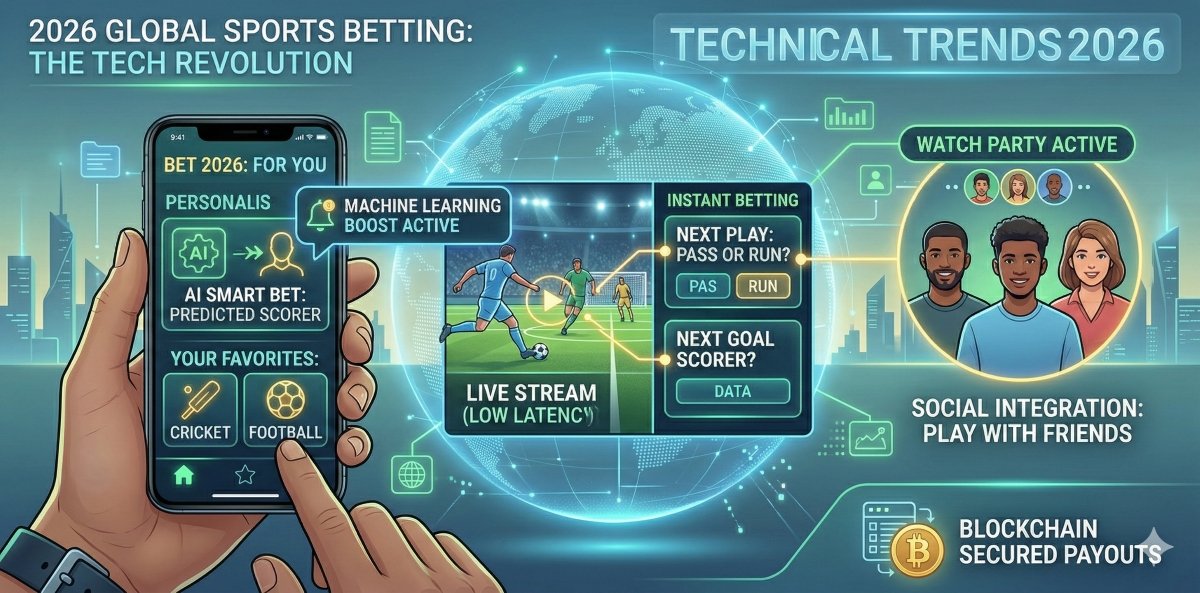
The way people bet on sports is changing faster than a sprinter in a 100‑meter dash. Not long ago, placing a bet meant visiting a physical shop or using a basic website. By 2026, technology has turned this into a high‑speed, personal experience that lives right in your pocket. The global market is now worth over $125 billion, built on a foundation of smart code, instant data, and immersive digital experiences.

Smart Apps That Know Your Style

If you open a betting app today, it probably looks different from your friend’s app. This is because of artificial intelligence. Companies use AI to study what sports you like, which teams you follow, and even the times of day you prefer to play. Instead of showing you a long list of games you don’t care about, the app highlights a cricket match in India or a football game in Brazil because it knows those are your favorites.

Think of it like a streaming service that suggests a movie based on what you watched yesterday. These apps use machine learning to suggest “smart bets.” If you always bet on a specific player to score, the app might offer you a special bonus for that player just before the game starts. This makes the experience feel less like a transaction and more like a conversation with a friend who knows sports as well as you do.

The Rise of Micro-Betting

One of the biggest shifts in 2026 is the move toward micro‑betting. In the past, you would bet on who would win the whole game. Now, you can bet on the very next play. Will the next serve in a tennis match be an ace? Will the next play in an American football game be a run or a pass?

This is possible because of ultra‑low latency streaming. In simple terms, this means the video you see on your phone is perfectly synced with the real game. Companies use a technology called WebRTC to make sure that when you see a goal happen, it is actually happening at that exact moment. This allows for thousands of tiny betting opportunities throughout a single match, keeping fans engaged from the first minute to the last.

Blockchain and Clear Records

Trust is a big deal when money is involved. In 2026, blockchain technology is helping to make betting platforms more transparent. Blockchain acts like a digital ledger that no one can change. When you place a bet, the record is locked in. This ensures that the odds are fair and that payouts happen exactly when they should.

Many platforms now also accept cryptocurrencies like Bitcoin or Ethereum. This is especially helpful for people in different countries who want to avoid high bank fees or long waiting times for international transfers. Using digital coins can make deposits and withdrawals almost instant. For someone living in a region with a developing banking system, this technology opens up a world of secure options that were not available just a few years ago.

Betting Becomes a Social Event

Betting used to be a solo activity, but now it is becoming social. Many apps have added “watch party” features. You can hop into a video chat with three of your friends, watch the game together on the same screen, and place group bets.

Imagine you and your friends are all watching a basketball game from different cities. You can all put $5 into a shared “pot” and bet on whether the home team will make their next three‑pointer. It turns the game into a shared hobby rather than just a way to try and win money. Some apps even use augmented reality to show live stats hovering over the players on your screen, making you feel like you have a high‑tech sports bar in your living room.

Staying Safe with Tech

With all this fast‑paced action, staying safe is more important than ever. Technology is also being used to help players keep their habits healthy. AI tools now monitor how people play. If a user starts betting much more than usual or late at night, the system can send a gentle notification to suggest taking a break.

These “responsible gaming” tools are built into the apps. They can automatically set limits on how much money someone can deposit in a week. This helps make sure that sports betting remains a fun form of entertainment rather than a financial burden.

Key Technical Growth Drivers in 2026

TechnologyMain BenefitImpact on User
Artificial IntelligencePersonalizationFaster access to favorite sports
Low‑Latency VideoReal‑time updatesEnables micro‑betting on every play
BlockchainTransparencyGuaranteed fair play and fast payouts
Social IntegrationCommunityAbility to play and watch with friends
Responsible Gaming ToolsSafetyHelps users manage healthy betting habits

Conclusion

The sports betting world in 2026 is no longer just about luck. It is about a smooth, fast, and safe digital experience. Whether it is through a smart recommendation, a micro‑betting opportunity, or a 3D replay on your phone, technology is making sure every fan feels like they are part of the action. With AI personalization, blockchain transparency, and social integration, the industry is evolving into a more engaging and responsible ecosystem. For players, this means betting is becoming less about chance and more about enjoying a connected, high‑tech sports experience.

Changes Brought to the Online Gaming Ecosystem by Blockchain Tech

The world of online gaming is always changing. New technologies arrive and shift how players interact with their favorite digital worlds. Currently, one of the biggest drivers of change is blockchain technology. You might know blockchain from digital currencies, but it is also making a significant impact on gaming, reshaping how players view ownership, fairness, and participation.

In the past, the way people built web authority was often fragile and short-term. Modern strategies, sometimes called an “Asset Flywheel,” focus on building real informational authority over time. As a broad industry trend, understanding blockchain in gaming is a key part of building that depth. This article explains how blockchain is transforming the gaming ecosystem in simple terms.

Truly Owning Your Digital Items

In traditional online games, when you buy a sword, a costume, or a piece of land, you do not really own it. The game company owns it. If the company closes the game, all your items disappear.

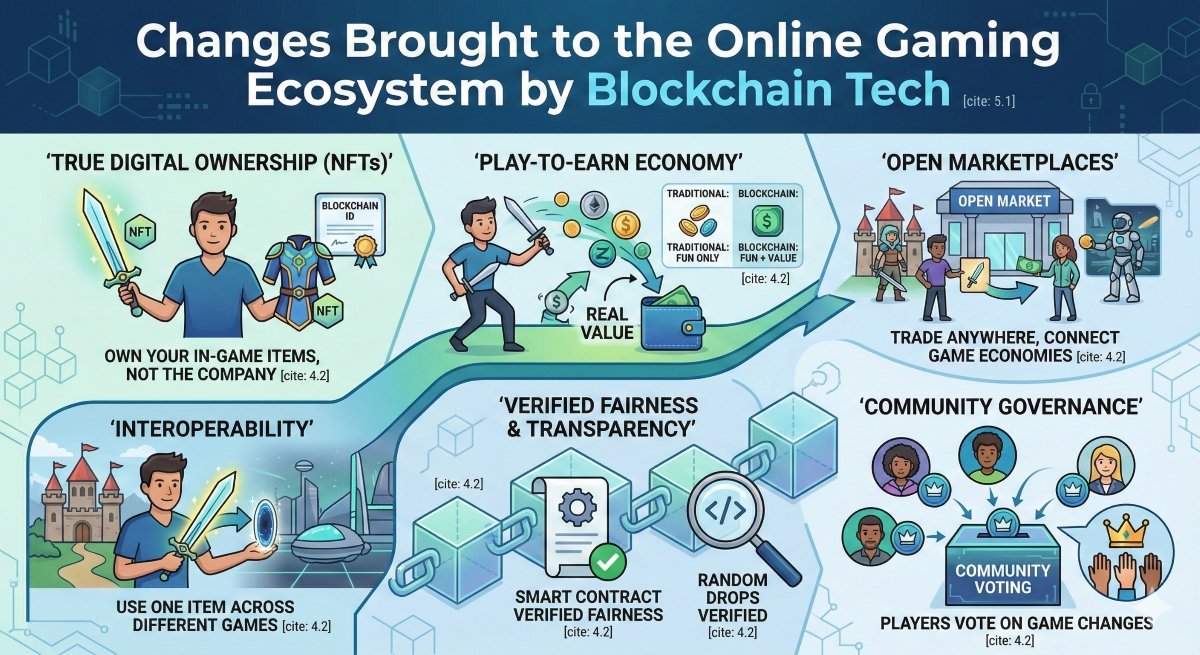
Blockchain changes this concept through Non-Fungible Tokens (NFTs). When a game item is an NFT on a blockchain, it belongs to the player, not the game developer. The developer cannot take it away from you. You can hold these items in your own digital wallet. This true ownership is one of the biggest conceptual shifts in modern gaming history, giving players lasting value beyond the lifespan of a single game.

The Rise of “Play-to-Earn”

Because players now truly own their digital items, a new type of gaming model has emerged. It is often called “Play-to-Earn.” In older games, you played for fun, and any money spent was purely for entertainment. In “Play-to-Earn” games, the time and effort you put into the game can result in earning real value. You might earn digital assets through gameplay that can then be sold to other players on open markets. For many players, gaming is shifting from just a hobby to a potential source of income. This creates a whole new economy within the gaming ecosystem, blurring the line between leisure and livelihood.

Trading on Open Markets

In traditional games, if you wanted to sell an item, you usually had to do it within the game’s strict system. Often, you could only trade for in-game currency that had no value in the real world.

Blockchain breaks down these walls. Because items exist as tokens on a public blockchain, players can trade them on third-party marketplaces, completely outside of the game itself. You can sell a rare item from one game for digital currency and then use that currency to buy an item in a completely different game, or even exchange it for traditional money. This connects game economies to the real-world economy, creating a more fluid and dynamic digital marketplace.

Interoperability: Items that Move Between Games

Imagine buying a special outfit in one game and then being able to wear that same outfit in a totally different game made by a different company. This concept is called “interoperability.” Currently, most games are like closed islands. However, because blockchain assets exist on a shared public network, different games can be built to recognize and use the same tokens. While this is still difficult to implement perfectly, the technology makes it possible for your digital identity and property to move with you across different virtual worlds, paving the way for a more unified metaverse experience.

Improved Fairness and Transparency

Traditional games have a trust issue. Players have to trust that the game company is not cheating, that the random drops are truly random, and that the economy is fair. Blockchain offers a solution through transparency. The rules of a blockchain game are often written in “smart contracts,” which are pieces of code that run automatically on the blockchain. Because the blockchain is public, anyone can view this code and verify the transactions. This makes it much harder for fraud or manipulation to happen, creating a fairer environment for all players.

A New Way to Govern Games

Blockchain also introduces new ways to manage games. Some blockchain games use “governance tokens.” Players who hold these tokens can vote on proposed changes to the game. Instead of a single company making all the decisions, the community of players has a real voice. They can vote on things like new features, changes to the in-game economy, or even how the game’s development funds are spent. This shift toward decentralized management gives the players more control over the worlds they live in.

Challenges and Opportunities

While blockchain offers exciting opportunities, it also comes with challenges. Scalability, energy consumption, and regulatory concerns are ongoing issues. Not all players are comfortable with the financial aspects of blockchain gaming, and some worry about speculation overshadowing fun. Developers must balance innovation with accessibility, ensuring that blockchain enhances rather than complicates the gaming experience.

Conclusion

Blockchain technology is not just a small update; it is restructuring the fundamental rules of online gaming. By enabling true ownership, creating new open economies, and providing transparency, it is shifting power from game developers to the players themselves. As with any new technology, there are challenges to overcome, but the ecosystem is moving toward a more open, fair, and player-centric model.

The changes happening today are laying the groundwork for the next generation of digital entertainment. Whether you are a casual player or a dedicated enthusiast, understanding these trends is essential for navigating the future of the digital world.

How to Set a Gaming Budget: Practical tips for managing personal finances while enjoying hobbies

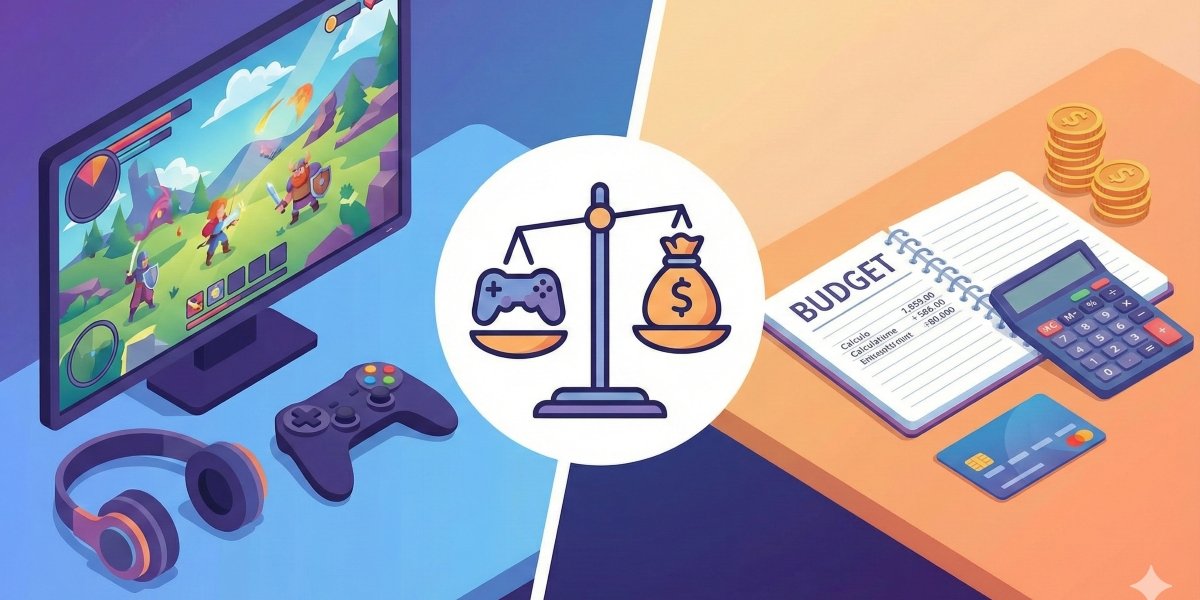
Everyone needs a hobby to relax and have fun. For many, gaming or online platforms are the perfect way to spend free time. However, hobbies can quickly become expensive. Without a clear plan, it is easy to spend more money than intended, which can lead to stress and financial strain.

Setting a budget is not about stopping your fun. It is about making sure you can keep enjoying your hobby for a long time without hurting your bank account. A well‑structured gaming budget allows you to balance entertainment with financial responsibility. Here is a practical guide on how to manage your money while staying in control.

Understand Your Monthly Income

The first step to any good budget is knowing exactly how much money you have. Look at your total monthly income after taxes. This is your starting point. Before you think about gaming, you must cover your “needs.” These are things like rent, electricity, groceries, and insurance.

Once those are paid, see what is left. This remaining money is for “wants,” such as movies, dining out, or gaming. A popular rule is the 50/30/20 rule. This means 50% goes to needs, 30% to wants, and 20% to savings or debt. Your gaming budget should fit comfortably within that 30% for wants.

Create a Separate “Fun” Account

A common mistake is keeping all your money in one place. When you see a large balance in your main account, it feels like you have a lot of money to spend. This often leads to overspending.

To avoid this, try opening a separate digital wallet or bank account just for your hobby. Every payday, move a set amount of money into that account. Once that money is gone for the month, you stop spending. This creates a clear boundary between your living expenses and your entertainment.

Avoid “Impulse” Spending

Gaming platforms are designed to make spending very easy. One‑click purchases and limited‑time offers are meant to make you act quickly without thinking. When you see a deal that looks exciting, try the “24‑hour rule.” Wait one full day before clicking the buy button. Often, the excitement fades after a night of sleep, and you realize you didn’t actually need that item. This simple pause can save you a significant amount of money over the year.

Track Every Cent

It is hard to fix a problem if you don’t know it exists. Many people are shocked when they see how much they actually spend on small purchases. Those small amounts add up fast.

Use a simple notebook or a free app to track your spending. Write down every purchase, no matter how small. Seeing the total at the end of the week gives you a “reality check.” If you see that you spent $50 on small, unnecessary digital items, you might decide to use that money for a high‑quality game next time instead.

Prioritize Quality Over Quantity

With so many options available, it is tempting to try everything. However, trying too many things at once usually means you don’t fully enjoy any of them. Instead of spending small amounts on many different things, focus on one or two high‑quality experiences.

Research a platform or a game thoroughly before spending money on it. Look for reviews and watch videos of others using it. By being selective, you ensure that every dollar you spend brings you the maximum amount of joy.

Set “Session” Limits

Sometimes, we spend more money when we are tired or have been playing for a long time. Our decision‑making skills get weaker the longer we stay online. Set a timer for your sessions. When the timer goes off, take a break. Walk away from the screen, drink some water, and think about your budget. Staying fresh helps you stay logical. If you find yourself wanting to spend more just to “keep the fun going,” it is usually a sign that it is time to stop for the day.

Never Chase Your Losses

This is the most important rule for any hobby that involves a financial risk. If you lose money, your brain might tell you that you are “due” for a win. This is a lie.

Trying to win back lost money is called “chasing.” It almost always leads to even bigger losses because you start making emotional, desperate decisions. Accept that the money is gone. View it as the “cost of entertainment,” just like a movie ticket. If you hit your budget limit for the day, walk away. There is always tomorrow.

Summary Checklist for a Healthy Budget

Action ItemWhy It Works
Needs FirstEnsures your rent and food are always covered.
Separate AccountPrevents you from accidentally spending bill money.
24‑Hour RuleStops emotional, impulsive purchases.
Session TimerKeeps your mind sharp and your spending logical.
Accept LossesPrevents the dangerous cycle of chasing money.

Final Thoughts

Managing your finances doesn’t have to be boring. In fact, knowing your money is safe makes your hobby much more relaxing. By following these steps, you can keep the fun in gaming without the stress of overspending. A clear budget ensures that your hobby remains enjoyable, sustainable, and guilt‑free. Remember: the goal is not to limit your fun, but to protect it for the long term.