

Why Even Experts Make Big Mistakes

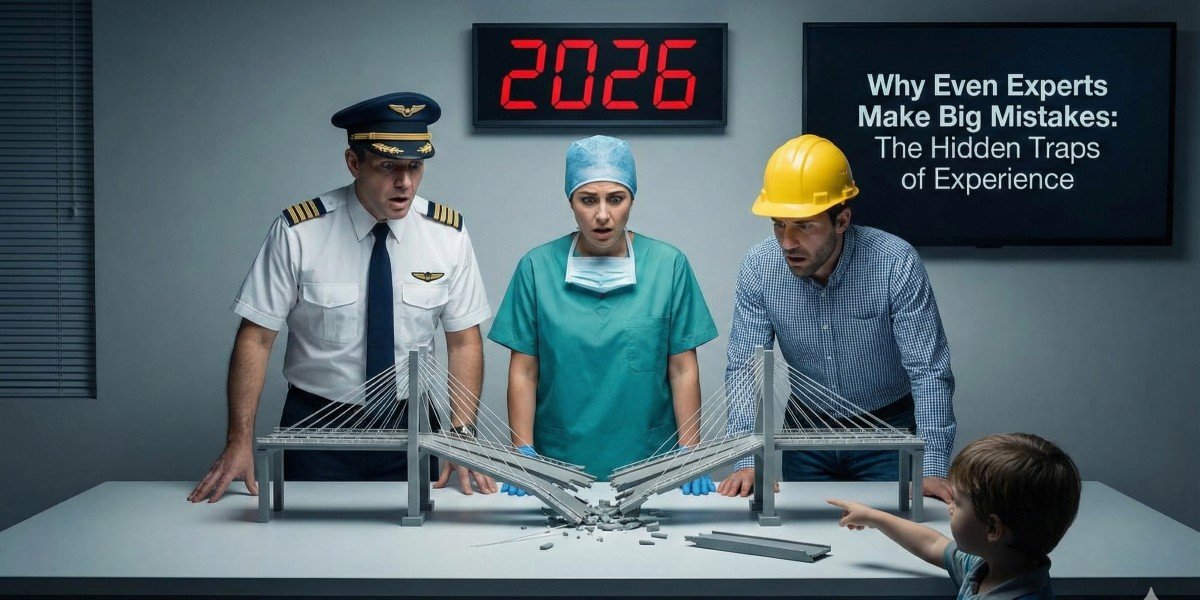
Imagine you are about to get on an airplane. You look at the pilot in their uniform. They look calm, older, and experienced. You feel safe because you think, “They have done this thousands of times. They know exactly what to do.” This sense of security is natural—we trust experts because of their experience. We feel the same way about doctors, engineers, and financial advisors. We believe that experience means perfection.
But here is a surprising truth: experts make mistakes too. Sometimes, they make huge, disastrous mistakes because they are experts. How is that possible? Shouldn’t doing something for twenty years make you perfect at it? Not always. In fact, having too much experience can sometimes trick the human brain into dangerous shortcuts.
This article explores why experience doesn’t always improve judgment, why the smartest people in the room sometimes make the biggest errors, and how true expertise requires humility and constant learning.
The Trap of “Autopilot”
Think about when you first learned to drive a car. You were very focused. You checked your mirrors constantly. You held the steering wheel tightly with both hands. You were slow and careful because everything was new.
Now, think about how you drive today. You probably listen to music, talk to passengers, and think about what you will eat for dinner. You are driving on “autopilot.” Your brain knows the routine so well that it stops paying close attention to the details.
Experts do the same thing at their jobs. A surgeon who has done the same operation 500 times might stop worrying about the small steps. Their brain tries to save energy by zoning out. This state of being “too comfortable” is dangerous. When your brain is on autopilot, it misses new, small problems. A routine situation can turn into an emergency very quickly, and the expert might be too relaxed to notice it in time.
The Danger of Overconfidence
There is a fine line between confidence and arrogance. When someone becomes a top expert in their field, they often start to believe they cannot be wrong. When you feel invincible, you stop checking your work. You might ignore safety checklists because you think, “I don’t need that; I know what I’m doing.”
In today’s fast-moving world, new information emerges constantly. An overconfident expert often stops listening to new ideas, especially if those ideas come from younger, less experienced people. They believe their “old way” is the only way. This refusal to listen is a major cause of big mistakes in business, medicine, and technology.
Seeing Only What You Want to See
Our brains are designed to take shortcuts. One of these shortcuts is called “confirmation bias.” This is a fancy term for a simple habit: we only look for information that proves we are already right.
Let’s look at a medical example. Imagine a doctor sees a patient with a cough and a fever. The doctor has seen fifty patients with the flu this week. Their brain immediately says, “This is also the flu.” Because the doctor is so sure, they might stop looking for other symptoms. They might miss a small clue that points to a more serious disease. The expert’s brain was so focused on confirming its first guess that it became blind to the truth.
Using Old Maps for New Roads
Experience is like having a mental map of how the world works. The problem is that the world changes, but our mental maps often stay the same. What worked ten years ago might not work today.
An expert financier might use old rules to invest money, not realizing that the digital economy operates differently. An experienced engineer might use older, familiar materials instead of newer, safer ones because “that’s how we’ve always done it.” When experts rely too much on their past successes, they fail to prepare for future challenges. They are using an outdated map to navigate a new world.
How to Stay Smart
So, should we stop trusting experts? Of course not. Experience is valuable. We need pilots who have flown through storms and surgeons who know the human body perfectly. However, we must remember that experts are still human. Their brains get tired, they get too comfortable, and they get stubborn.
The true mark of a great expert is humility. The best experts know that no matter how much experience they have, they can still be wrong. They continue to use checklists. They listen to young employees. They are always asking, “What if I am missing something?”
As a “smart friend,” the best advice is to always keep a little bit of doubt. Whether you are the expert or you are hiring one, remember that questions are healthy. A little bit of uncertainty is what keeps you safe from the big mistakes.
Key Takeaway
- Experts can fall into autopilot and miss details.
- Overconfidence leads to ignoring safety and new ideas.
- Confirmation bias blinds experts to alternative explanations.
- Old mental maps fail in new environments.
- Humility and curiosity are the true signs of expertise.
Even the most experienced professionals are vulnerable to mistakes. By recognizing these traps and practicing humility, experts can continue to grow, adapt, and avoid the errors that come from being “too sure.” In the end, expertise is not about perfection—it’s about staying alert, open-minded, and willing to learn.