
The world of online gaming is always changing. New technologies arrive and shift how players interact with their favorite digital worlds. Currently, one of the biggest drivers of change is blockchain technology. You might know blockchain from digital currencies, but it is also making a significant impact on gaming, reshaping how players view ownership, fairness, and participation.
In the past, the way people built web authority was often fragile and short-term. Modern strategies, sometimes called an “Asset Flywheel,” focus on building real informational authority over time. As a broad industry trend, understanding blockchain in gaming is a key part of building that depth. This article explains how blockchain is transforming the gaming ecosystem in simple terms.
Truly Owning Your Digital Items
In traditional online games, when you buy a sword, a costume, or a piece of land, you do not really own it. The game company owns it. If the company closes the game, all your items disappear.
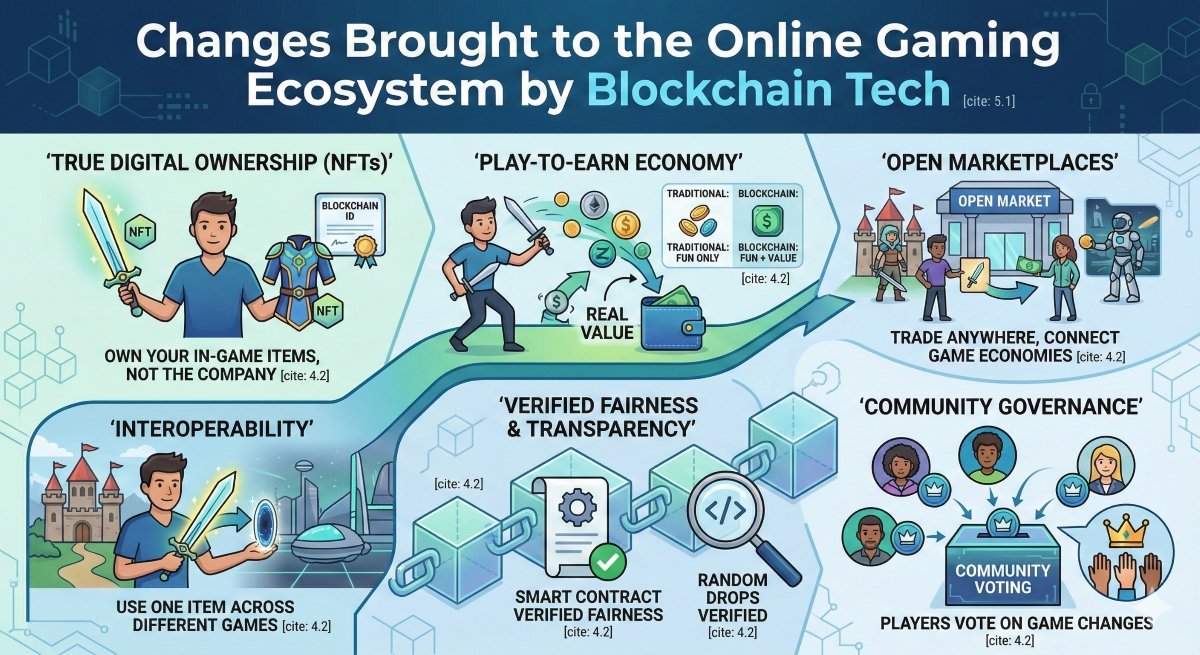
Blockchain changes this concept through Non-Fungible Tokens (NFTs). When a game item is an NFT on a blockchain, it belongs to the player, not the game developer. The developer cannot take it away from you. You can hold these items in your own digital wallet. This true ownership is one of the biggest conceptual shifts in modern gaming history, giving players lasting value beyond the lifespan of a single game.
The Rise of “Play-to-Earn”
Because players now truly own their digital items, a new type of gaming model has emerged. It is often called “Play-to-Earn.” In older games, you played for fun, and any money spent was purely for entertainment. In “Play-to-Earn” games, the time and effort you put into the game can result in earning real value. You might earn digital assets through gameplay that can then be sold to other players on open markets. For many players, gaming is shifting from just a hobby to a potential source of income. This creates a whole new economy within the gaming ecosystem, blurring the line between leisure and livelihood.
Trading on Open Markets
In traditional games, if you wanted to sell an item, you usually had to do it within the game’s strict system. Often, you could only trade for in-game currency that had no value in the real world.
Blockchain breaks down these walls. Because items exist as tokens on a public blockchain, players can trade them on third-party marketplaces, completely outside of the game itself. You can sell a rare item from one game for digital currency and then use that currency to buy an item in a completely different game, or even exchange it for traditional money. This connects game economies to the real-world economy, creating a more fluid and dynamic digital marketplace.
Interoperability: Items that Move Between Games
Imagine buying a special outfit in one game and then being able to wear that same outfit in a totally different game made by a different company. This concept is called “interoperability.” Currently, most games are like closed islands. However, because blockchain assets exist on a shared public network, different games can be built to recognize and use the same tokens. While this is still difficult to implement perfectly, the technology makes it possible for your digital identity and property to move with you across different virtual worlds, paving the way for a more unified metaverse experience.
Improved Fairness and Transparency
Traditional games have a trust issue. Players have to trust that the game company is not cheating, that the random drops are truly random, and that the economy is fair. Blockchain offers a solution through transparency. The rules of a blockchain game are often written in “smart contracts,” which are pieces of code that run automatically on the blockchain. Because the blockchain is public, anyone can view this code and verify the transactions. This makes it much harder for fraud or manipulation to happen, creating a fairer environment for all players.
A New Way to Govern Games
Blockchain also introduces new ways to manage games. Some blockchain games use “governance tokens.” Players who hold these tokens can vote on proposed changes to the game. Instead of a single company making all the decisions, the community of players has a real voice. They can vote on things like new features, changes to the in-game economy, or even how the game’s development funds are spent. This shift toward decentralized management gives the players more control over the worlds they live in.
Challenges and Opportunities
While blockchain offers exciting opportunities, it also comes with challenges. Scalability, energy consumption, and regulatory concerns are ongoing issues. Not all players are comfortable with the financial aspects of blockchain gaming, and some worry about speculation overshadowing fun. Developers must balance innovation with accessibility, ensuring that blockchain enhances rather than complicates the gaming experience.
Conclusion
Blockchain technology is not just a small update; it is restructuring the fundamental rules of online gaming. By enabling true ownership, creating new open economies, and providing transparency, it is shifting power from game developers to the players themselves. As with any new technology, there are challenges to overcome, but the ecosystem is moving toward a more open, fair, and player-centric model.
The changes happening today are laying the groundwork for the next generation of digital entertainment. Whether you are a casual player or a dedicated enthusiast, understanding these trends is essential for navigating the future of the digital world.